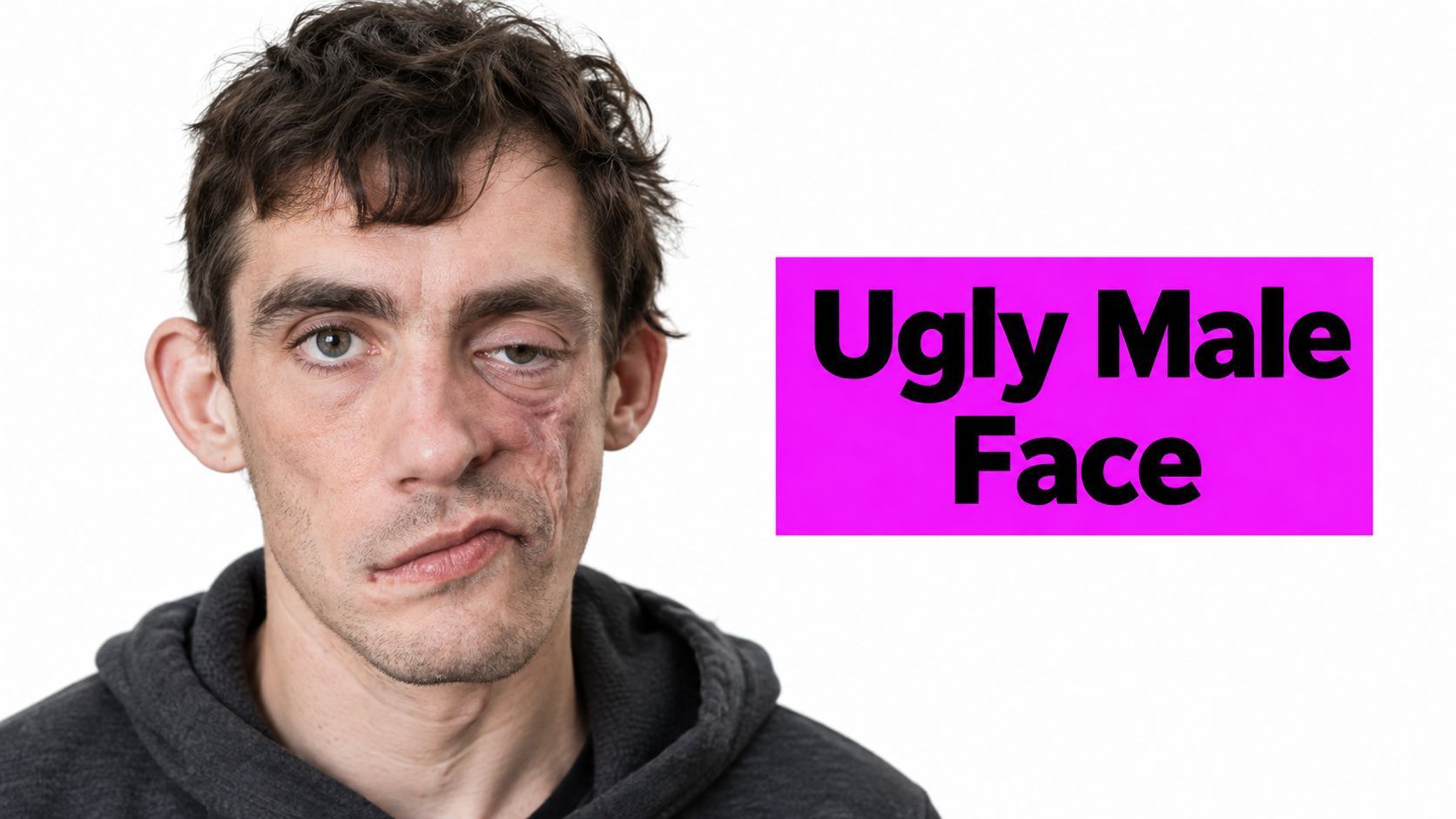
How to Design an Ugly Male Face in AI Art Ethically

Ryan Bennett • October 12, 2026
Learn how to design an ugly male face in AI art with responsible prompts, post-production tips, and ethical guardrails for character design in 2026.
Most advice about an “ugly male face” starts with the wrong target. It tells you to exaggerate the jaw, destroy symmetry, add scars, and call the result a villain. That produces a stock caricature, not a designed character. I've shipped stylized villains and background NPCs, and the reliable approach is less insulting and more precise: “ugly” is a visual brief made from proportions, presentation, expression, and context.
A face isn't ugly in the same way a prop has a fixed shape. Viewers bring culture, familiarity, bias, and story context to the image. Your job is to direct those variables deliberately, especially when an AI system may repeat the same narrow stereotype across an entire asset set.
What “Ugly Male Face” Really Means in Character Design
An “ugly male face” is not a universal anatomy preset. It is a character-design decision about the reaction you want a specific image, scene, and audience to produce. A major review of facial-attractiveness research reports that ratings of unfamiliar faces commonly correlate at approximately 0.30–0.50 between observers. That indicates moderate agreement, not a single visual law. One viewer may read a narrow mouth and close-set eyes as sinister. Another may see a memorable, intelligent face. The design stays constant while the judgment shifts.
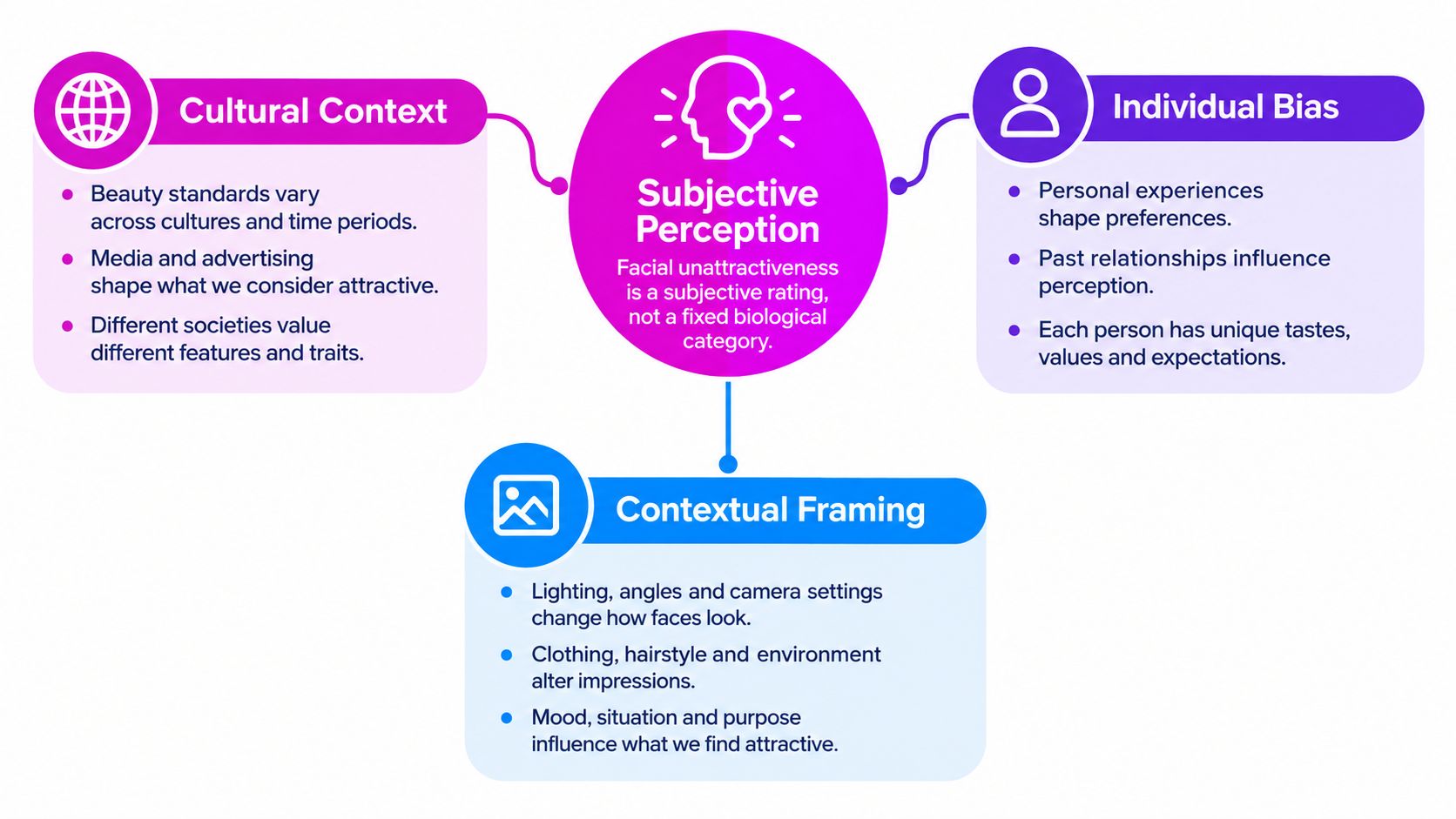
Turn the insult into a design specification
Use “ugly” as shorthand for a controlled visual outcome, then define the parts producing it. Research on facial averaging found that composite average male faces received higher ratings than individual source faces in a crowdsourced evaluation, while newer work indicates that facial shape contributes only modestly and inconsistently to attractiveness judgments (research on facial averaging). The production lesson is clear: specify how far the face should sit from the intended reference point instead of stacking random deformities.
Build the read from a few deliberate levers:
- Proportions: slightly atypical eye spacing, an unusually long midface, a compressed lower face, or a small mouth disrupting the expected visual rhythm.
- Asymmetry: one brow higher, a crooked nose, uneven eyelids, or a jaw turning subtly to one side.
- Surface cues: blemishes, rough texture, tired under-eyes, patchy facial hair, or sun damage.
- Expression: guarded neutrality, a forced smile, a clenched jaw, or eyes that contradict the mouth.
- Presentation: flat overhead light, an unflattering lens position, dull styling, or clothing that conflicts with the character's role.
Choose one primary read and support it with two or three secondary details. Push every cue to an extreme and the face becomes a mask, not a person.
Avoid the fake shortcut
A strongly masculine face is not automatically attractive, and exaggerated masculinity does not reliably create unattractiveness. Treat the result as a rating outcome within a scene, not an anatomical diagnosis. A tired dockworker under harsh fluorescent lighting can feel less attractive than the same character laughing in warm afternoon light.
That difference gives you a controllable design variable. It also keeps the brief from turning ordinary male variation into a defect. Before generating a set, check whether your chosen cues describe the character's role and story, or merely repeat a cultural stereotype. Use “ugly” as a precise production label, never as a judgment about the people whose features you borrow.
Building the Prompt That Defines the Character
An “ugly male face” prompt fails when it treats unattractiveness as a pile of defects. Build a person first, then make specific design choices that disturb the intended visual read. Start with the character's role, because a tired mechanic, court clerk, and goblin merchant need different kinds of facial tension.
Use this sequence:
- Identity and role: “middle-aged night-shift mechanic,” “young court clerk,” or “goblin market merchant.”
- Facial design: define proportions, asymmetry, skin cues, and facial hair.
- Expression and pose: describe the action in the face, not just its static appearance.
- Wardrobe and environment: place the features in a lived-in social and occupational context.
- Style and camera direction: set the illustration language, lens feel, framing, and light.
- Exclusions: remove glossy beauty lighting, flawless skin, fashion-editorial polish, or generic villain styling when they conflict with the brief.
Sequence matters. If the prompt opens with a long list of facial defects, the generator may produce a distorted mask. Give it identity and context first, then specify one dominant facial read and two or three supporting cues. The result stays recognizably human while still communicating fatigue, suspicion, neglect, or social pressure.
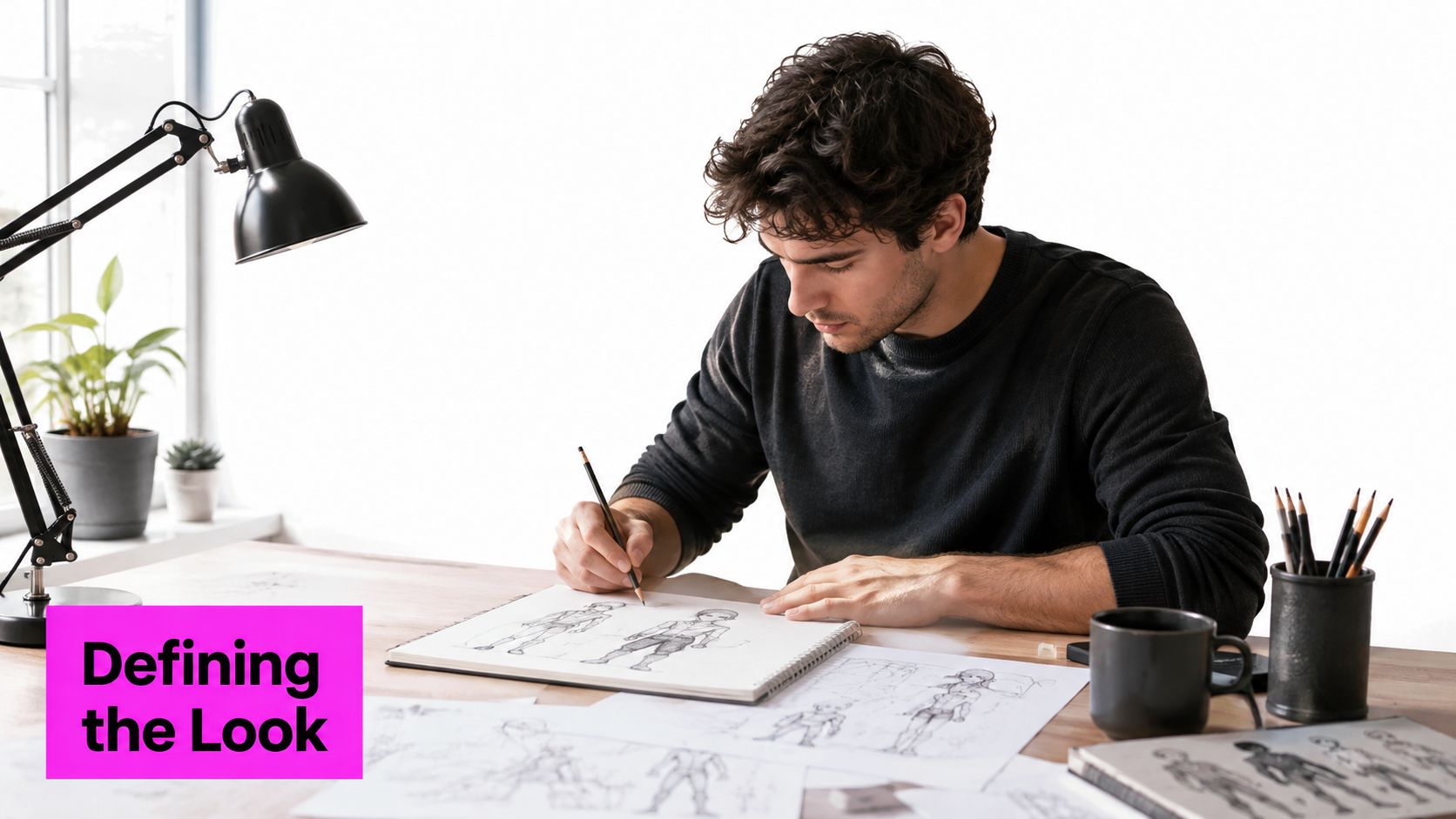
Three prompts that produce different reads
Gritty antihero
Fictional male antihero, late thirties, narrow face with a long midface, slightly uneven eyelids, crooked nose healed after an old injury, sparse beard with uneven growth, dry textured skin, wary expression, shoulders held defensively, worn canvas jacket, rain-dark alley, muted industrial palette, grounded game concept art, side lighting that carves the cheekbones, realistic proportions, no beauty retouching, no glossy skin, no exaggerated superhero jaw, no caricature.
Exhausted everyman
Fictional male bus driver, early forties, ordinary facial proportions with a slightly recessed chin, heavy under-eye shadows, patchy stubble, chapped lips, one eyebrow raised from habitual skepticism, tired half-smile, rumpled work shirt, morning depot interior, soft gray window light, naturalistic editorial portrait, restrained color, believable skin texture, no villain scars, no fashion model styling, no perfect symmetry, no dramatic horror makeup.
Stylized goblin merchant
Fictional adult goblin merchant, compact face, broad nose, small close-set eyes, one ear higher than the other, lopsided grin, stained teeth, wiry cheek hair, expressive crow's feet, patched velvet coat, cluttered candlelit stall, hand-painted fantasy RPG character sheet, exaggerated but readable silhouette, warm rim light, rich painterly texture, mischievous rather than evil, no human beauty standards, no photorealistic gore, no generic monster face.
Keep the phrase “stylized but readable.” It tells the model to exaggerate with purpose instead of chasing random deformity. For prompt order, attribute grouping, composition, and exclusions, follow Sculpty's prompt engineering guide. The guide to writing AI prompts also helps maintain consistent fields across a repeatable workflow.
For batch work, lock the style phrase, camera language, palette, and background treatment. Vary identity, facial structure, expression, and social context in separate fields. Review the set for repeated associations, such as linking rough skin or crooked features to criminality. A coherent cast can still contain varied kinds of unattractiveness.
Post-Production Moves to Lock the Read
Generation gives you raw material. Post-production decides whether the face reads as a deliberate character or as a failed beauty portrait.
Start with lighting. A broad, frontal light smooths features and makes almost anyone look polished. A controlled side light reveals the bridge of the nose, uneven eyelids, cheek planes, and jaw transitions. Use contrast to clarify structure, not to bury the face in black.
A standardized 3D study used 1,021 landmarks across 29 anatomical curves, assessed by six independent examiners with a 100-mm visual-analogue scale (standardized 3D facial study). You don't need to reproduce that laboratory setup for concept art, but the principle transfers: small geometric and presentation changes can alter the read.
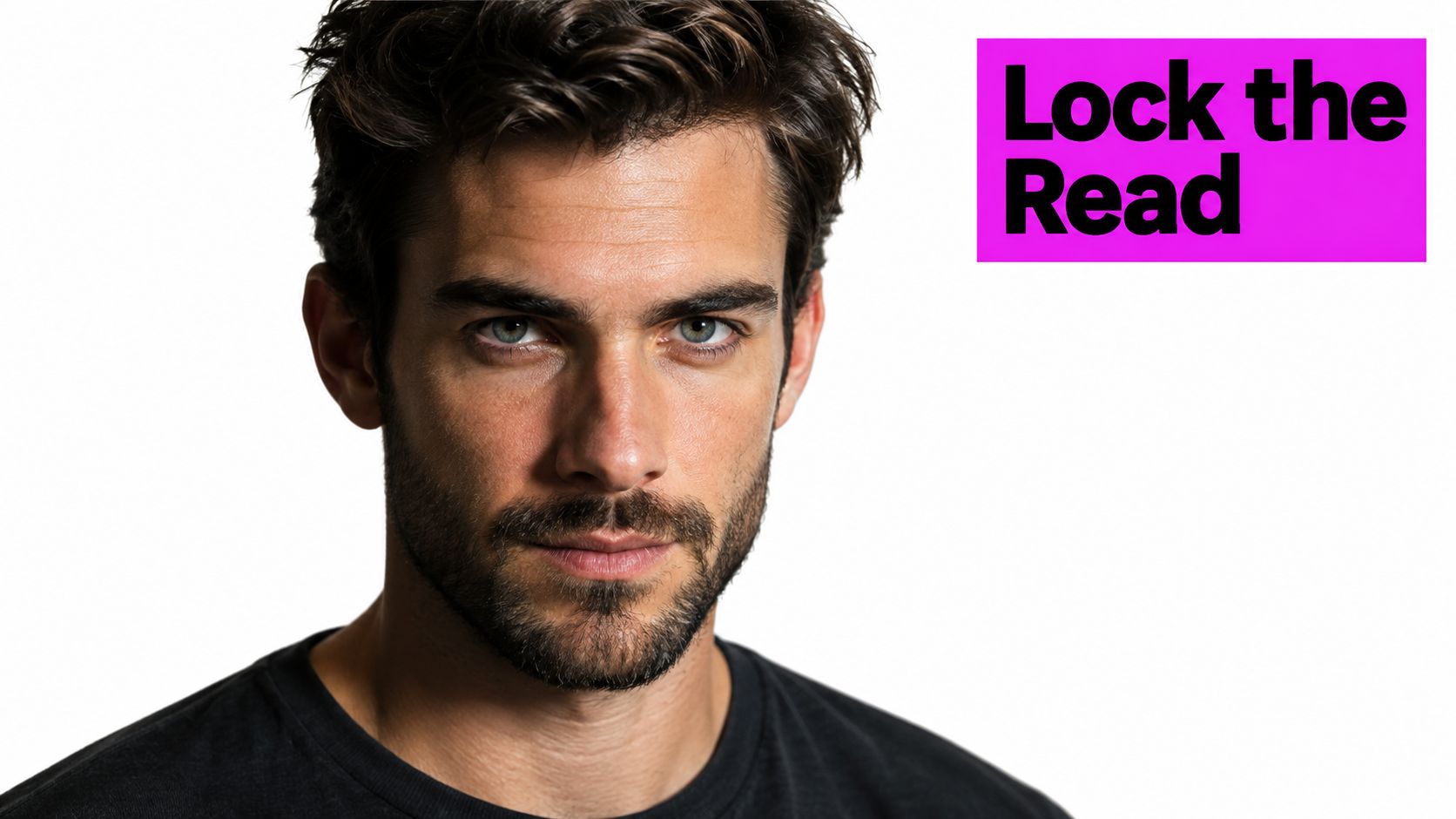
A practical finishing pass
- Shape pass: adjust one face region at a time. Nudge the brow, nose, mouth, or chin instead of liquifying the entire face.
- Texture pass: add restrained pores, dryness, redness, or uneven facial hair. Texture should support age and occupation.
- Color pass: desaturate selectively, especially in clothing and background, while preserving enough skin variation to keep the character human.
- Light pass: reinforce the chosen key light and remove accidental glamour highlights from the eyes, lips, and forehead.
- Context pass: place the character in a setting that explains the look. A stained collar says more than a random facial scar.
- Consistency pass: apply the same crop, tonal range, and grain treatment across the batch.
Batch editors can help with mechanical work such as background removal, face swaps, resizing, and enhancement. Use those tools to save iteration time, not to erase every irregularity. Over-enhancement creates plastic skin, sharpens noise into fake pores, and turns a believable face into a grotesque mask.
Production rule: If the character's personality disappears after the beauty pass, undo the beauty pass.
The strongest “ugly” designs retain a human center. Let the eyes focus on something, let the mouth carry a specific habit, and give the expression a reason. A face that looks difficult to live with is more compelling than a face assembled from random damage.
Styling Levers That Actually Move Perceived Attractiveness
“Unattractive” is a weak prompt. A character-design lead needs controllable signals: familiarity, condition, expression, grooming, light, and styling. Research supports that approach. Averageness was positively associated with male attractiveness, while masculinity and symmetry did not reliably predict it (research on averageness, masculinity, and symmetry). A 2025 review of facial attractiveness likewise found that averageness predicted attractiveness in male and female faces, while masculinity was not a significant standalone predictor for male faces.
Use these levers to define a readable character, not to chase a universal rating.
| Lever | Effect on rating | Prompt hook |
|---|---|---|
| Averageness | Often increases familiarity and broad appeal | “recognizable proportions with one distinctive deviation” |
| Skin condition | Suggests fatigue, illness, age, or rough living | “uneven texture, mild redness, dry cheeks, natural pores” |
| Expression | Sets emotional availability at once | “strained half-smile, guarded eyes, tense jaw” |
| Grooming | Signals care, neglect, occupation, and social context | “uneven stubble, overgrown sideburns, poorly trimmed beard” |
| Lighting | Softens or hardens the same structure | “flat overhead fluorescent light, weak catchlights” |
| Styling | Frames the face through color, silhouette, and cultural cues | “ill-fitting work jacket, faded collar, practical clothing” |
| Masculinity | Unreliable as a standalone attractiveness control | “avoid an exaggerated jawline; specify role and proportions” |
| Symmetry | Weak and inconsistent as a single target | “subtle natural asymmetry, not facial distortion” |
Spend your detail budget wisely
Write the character's intended read before adding “unattractive.” For exhaustion, specify expression, posture, lighting, and skin condition. For social awkwardness, use an over-rehearsed smile, rigid neck, and clothing that is too formal for the setting. Those details communicate a life rather than a pile of defects.
Grooming references can sharpen the prompt. A practical guide to cosmetic and presentation choices, including browse makeup advice, helps you describe finish, coverage, and texture without relying on vague insults.
The strongest ugly-face designs keep a human center. Give the eyes a focus, the mouth a habit, and the expression a reason. Build unattractiveness as a deliberate character-design brief, then check whether the result communicates personality instead of merely punishing facial difference.
The Ethics Checklist Before You Hit Generate
AI face generation can attach social value to appearance without announcing that it's doing so. Research reports that attractive-looking faces, particularly male faces, are more likely to be judged as real rather than artificially generated. Separate work on synthetic faces found that text-to-image systems associate attractiveness with unrelated positive traits such as intelligence and trustworthiness, while less-attractive faces produce higher classification error rates, with effects varying across racial and gender groups (research on synthetic-face judgments).
That's not a reason to avoid difficult faces. It's a reason to stop treating beauty as a neutral default.
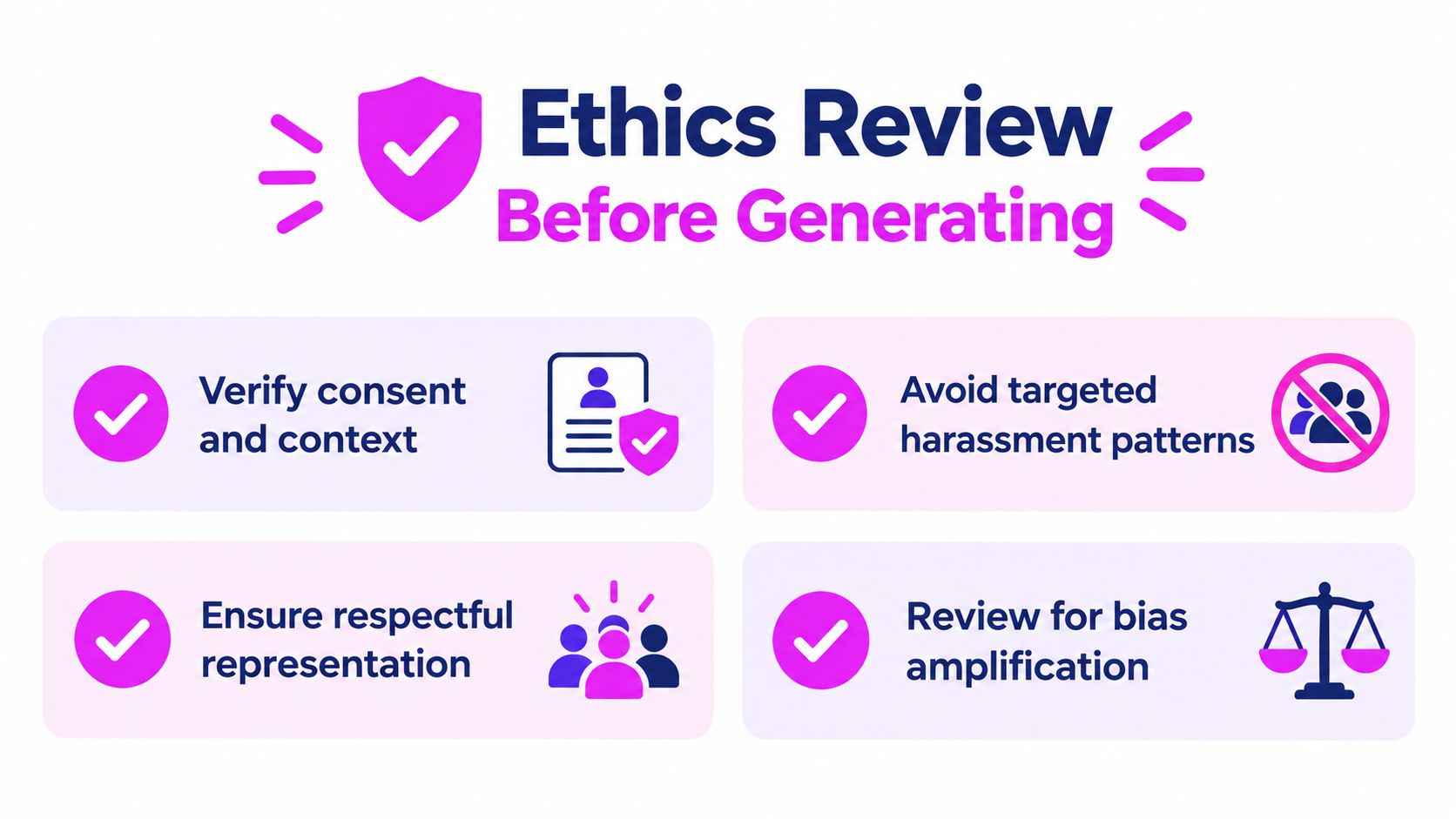
Run this review in under a minute
- Fiction first: Make the prompt describe a fictional character with a role, setting, and design purpose. Don't target a real person or imitate a private individual.
- Separate face from morality: Don't make facial difference stand in for evil, stupidity, dishonesty, or incompetence. A crooked nose can belong to a hero.
- Vary the cast: Change age, ethnicity, skin tone, facial proportions, grooming, and expression across the set. Don't let “ugly” become one demographic.
- Label synthetic people: If viewers could mistake a generated portrait for a real person, disclose that it's synthetic in the surrounding content.
- Inspect the outputs: Look for repeated ethnic features, one-sided aging, exaggerated deformities, or a pattern where attractive men receive better jobs and kinder expressions.
- Check the context: Ask whether the image is being used for storytelling, education, advertising, or ridicule. The same face can be respectful in one context and targeted harassment in another.
For production teams, the audit should happen before the batch is published. Sample the outputs, compare character roles against appearance, and reject any template that repeatedly links facial difference with villainy or incompetence. If your workflow includes identity replacement, review the AI face-swap guide before using a likeness-based process.
Ethical design isn't a disclaimer added after export. It's a constraint inside the prompt, the selection process, and the final caption.
Bulk Variations Without Repeating the Same Stereotype
Build the batch as a matrix of independent choices. Bulk generation magnifies the template, so one lazy definition of “ugly” becomes a cast of near-identical faces. Treat unattractiveness as a deliberate character-design brief, then vary the parts that carry identity, role, and emotion.
Create a controlled variation grid
Keep these elements stable:
- Visual language: painterly RPG concept art, realistic editorial portrait, or graphic novel ink.
- Camera treatment: frontal crop, three-quarter view, or consistent portrait framing.
- Palette: the same broad color family and contrast level.
- World context: the same faction, town, workplace, or historical setting.
Vary the character decisions:
- Age: young adult, middle-aged, older adult.
- Ethnicity and skin tone: distribute representation deliberately rather than repeating one default.
- Proportions: long midface, broad cheekbones, recessed chin, narrow lower face.
- Surface: acne, dryness, scars with narrative context, freckles, under-eye shadows.
- Expression: suspicion, fatigue, warmth, embarrassment, concentration.
- Grooming: clean-shaven, uneven stubble, long beard, shaved head, overgrown hair.
- Role: guard, teacher, trader, medic, thief, cook, or reluctant leader.
A practical batch brief reads: “Create a coherent set of fictional male NPC portraits in the same painted fantasy-RPG style and lighting. Vary age, ethnicity, facial proportions, skin condition, grooming, and emotional expression. Distribute heroic, ordinary, comic, threatening, and sympathetic roles across the set. Don't use scars, deformity, or dark skin as shorthand for villainy.”
Change one or two variables per prompt so you can identify what altered the result:
- “Older male healer, broad average face, dry skin, gentle tired eyes, neatly trimmed gray beard.”
- “Young male courier, narrow face, uneven brows, windburned cheeks, alert expression, cropped hair.”
- “Middle-aged male trader, distinctive long midface, soft jaw, patchy beard, amused expression.”
- “Adult male guard, ordinary proportions, one healed facial scar, calm eyes, practical grooming.”
Keep style phrases and character identifiers stable across repeat appearances. Use this character consistency guide to separate identity anchors from controlled variation. Review the grid before generating. If one feature repeatedly carries villainy, poverty, comic relief, or incompetence, change the role assignment or remove the shortcut from the template.
Shipping the Character Without Shipping the Bias
A shipped ugly male face must answer three questions: Who is this person? What shaped this presentation? Why does the audience need to see him? If the image offers no answers, unattractiveness has become decoration instead of character design.
Use the research context summarized in this review of averageness and masculinity as a reminder that perceived attractiveness depends on more than one exaggerated feature. The guardrails below assume the same principle: describe distance from a reference point, not failure.
Three guardrails belong in every pipeline
- Design guardrail: Define a fictional person through occupation, social position, emotional state, and visual history. Replace “ugly man” with observable features and a reason for each choice.
- Craft guardrail: Use lighting, texture, crop, expression, and post-production to establish one clear read. Random distortions weaken identity and make the result feel accidental.
- Ethics guardrail: Check each batch for demographic repetition, appearance-based moral coding, synthetic disclosure, and targeted resemblance before publication.
Redesign the set if every villain shares an ethnicity, every sympathetic character has a polished face, or every “ugly” character carries the same scar. Change it if the generator turns skin condition into comedy, facial difference into menace, or age into incompetence. Those shortcuts narrow the cast and attach moral meaning to appearance.
Review the guardrails before approval, not after an audience points out the pattern. The strongest cast includes faces that are difficult, ordinary, distinctive, warm, threatening, and beautiful, without treating any trait as a verdict on the person underneath.
Bulk Image Generation helps you create varied fictional male character faces in batches while keeping style, framing, and visual direction coherent. Visit Bulk Image Generation to build a controlled character set, test prompt variations, and scale an ethical design workflow without repeating the same stereotype.