The Ultimate Guide to the Pastel Pink Aesthetic

Ryan Bennett • January 24, 2026
Explore the pastel pink aesthetic from its cultural roots to modern branding. Learn to create stunning visuals with expert tips and practical AI prompts.
The pastel pink aesthetic is so much more than just a color. It’s a whole visual language that speaks in feelings of calm, gentle optimism, and a soft, dreamy nostalgia. Think of it as the hazy light of a perfect sunrise or the comforting texture of cotton candy—it’s a complete mood.
What Does the Pastel Pink Aesthetic Mean
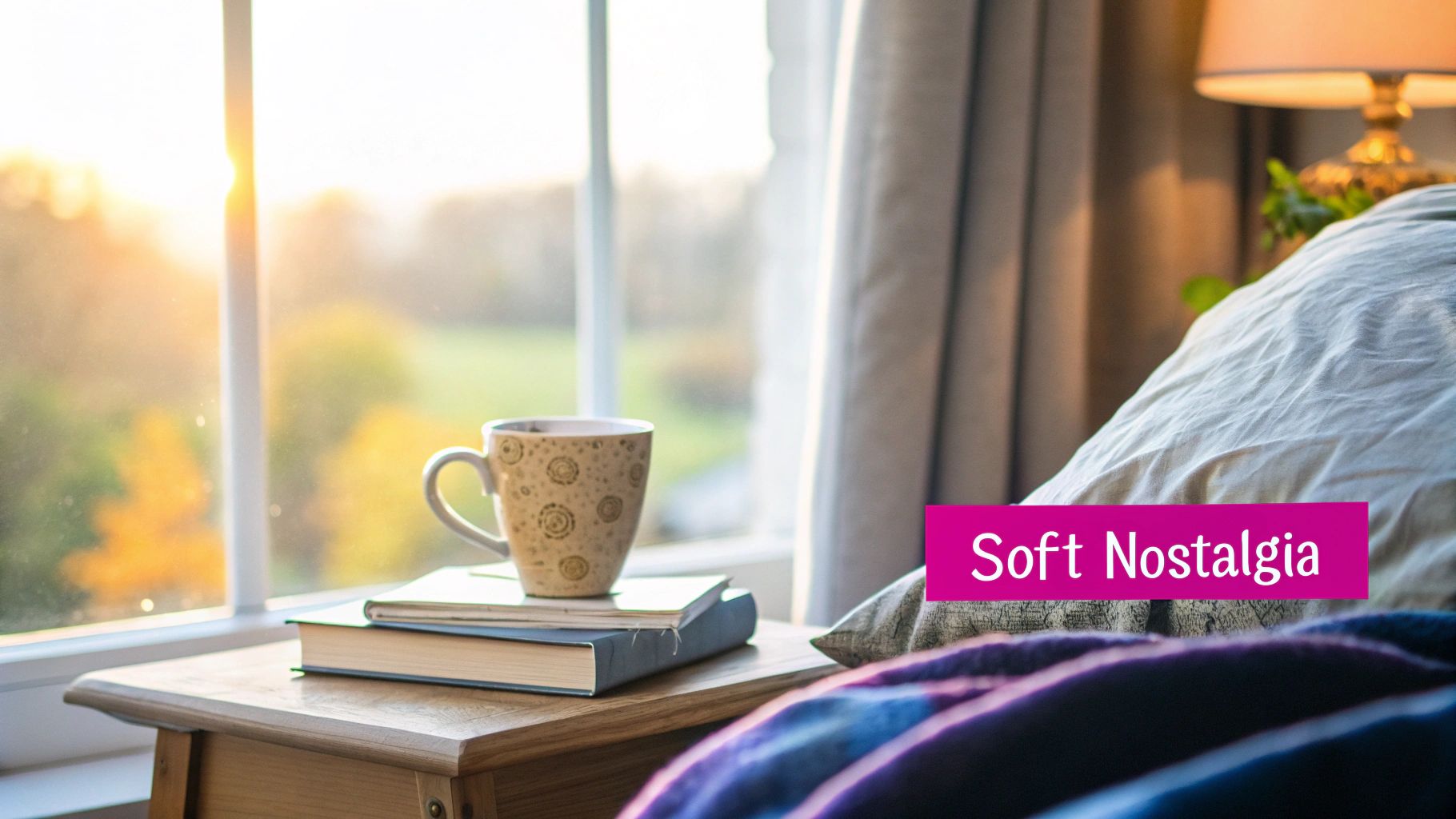
At its heart, the pastel pink aesthetic is all about creating a specific feeling. It’s not just a color choice; it's an entire sensory experience built on softness, simplicity, and warmth. You’ll see this visual style pop up everywhere, from minimalist digital branding to cozy, layered interior design.
To really get it, you have to look at its emotional core. It doesn't shout for attention; it whispers. That's what makes it so powerful for brands and creators who want to connect with their audience through comfort and authenticity.
The power of the pastel pink aesthetic lies in its subtlety. It creates an atmosphere of gentle approachability, inviting viewers into a world that feels both idealized and deeply personal.
This is exactly why it’s stuck around for so long. Before we jump into the nitty-gritty of creating these visuals, it’s crucial to get a feel for the mood you’re trying to build.
The Historical Roots of Pink
The color’s journey through history gives it so much more depth. Pastel pink really had its first major moment back in the 18th century when Madame de Pompadour made it the height of fashion in European high society. The Sèvres porcelain company even named a specific shade after her, cementing it as a symbol of royal luxury.
That history laid the groundwork for how pink evolved, though its meaning took a sharp turn in the 1950s when it was heavily marketed as a symbol of femininity. If you’re curious, you can explore more about the cultural history of pink and its evolution.
Understanding these historical and emotional layers helps you use the aesthetic way more effectively. You’re not just picking a color—you're tapping into a rich visual tradition to create a specific, intentional mood for your audience.
Getting the Visuals Right: The Core Elements
To really nail the pastel pink aesthetic, you have to think beyond just one color. It’s more like a recipe—pink is the main ingredient, sure, but the final dish needs the right mix of palette, texture, lighting, and even typography to truly come alive. When you master these components, you can craft a visual experience that’s cohesive and genuinely evocative every single time.
This aesthetic is almost never about a single, flat shade of pink. Instead, it leans on a thoughtfully chosen color palette to create depth and visual intrigue. A little bit of knowledge in color theory in graphic design goes a long way here, as it helps explain how colors play off each other to stir up specific feelings. For that classic pastel pink vibe, you’ll want to pair it with other soft, complementary shades.
- Analogous Colors: Picture gentle, seamless transitions, like pairing a soft pink with a peachy orange or a muted lavender. This creates a harmonious, low-contrast look that just feels calm and unified.
- Complementary Colors: If you want the pink to pop without being loud, try pairing it with a very light, desaturated mint green or a pale aqua. This tiny bit of contrast adds a subtle energy that keeps things interesting.
- Monochromatic Schemes: Sticking to just pink? Go for it. Using various shades, from a barely-there blush to a slightly deeper rose, adds wonderful dimension while keeping the whole look dreamy and cohesive.
To give you a quick reference, here’s a breakdown of the core components you’ll want to focus on when creating anything with a pastel pink aesthetic.
Core Components of the Pastel Pink Aesthetic
| Visual Element | Key Characteristics | Examples & Keywords for AI Prompts |
|---|---|---|
| Color Palette | Soft, desaturated, low-contrast. Often includes blush, rose, peach, lavender, and mint. | soft pastel color palette, muted pink and cream, dreamy analogous colors, monochromatic blush tones |
| Texture | Gentle, tangible, and comforting. Think soft fabrics, smooth surfaces, and natural elements. | fluffy wool texture, smooth matte ceramic, delicate flower petals, cozy fleece blanket, light-grain wood |
| Lighting | Diffused, soft, and ethereal. Avoids harsh shadows and direct, bright light. | soft natural light, golden hour glow, diffused sunlight through a window, dreamy ethereal lighting |
| Typography | Elegant, simple, and understated. Fonts should feel light and airy, never bold or aggressive. | delicate serif font, minimalist sans-serif, elegant thin typography, light and airy script |
This table acts as a great starting point, whether you're designing a moodboard, generating AI images, or planning a photoshoot. Keep these elements in mind, and you'll be well on your way.
Don't Forget Texture and Touch
Color sets the stage, but texture is what gives the pastel pink aesthetic its comforting, almost tangible quality. It turns a simple image into a sensory experience, inviting you to imagine what the scene feels like. The goal is to layer materials that feel inherently soft and gentle to the touch.
Think about textures that scream comfort and warmth:
- Soft Fabrics: Fluffy wool, cozy fleece, smooth cotton, or delicate linen.
- Smooth Surfaces: Polished ceramics, matte-finish plastics, and smooth paper add a clean, minimalist touch.
- Natural Elements: Light-grained wood, fresh flower petals, and soft clouds bring in an organic, calming feel.
Mixing up these textures is the secret to creating visuals that have real depth. If you’re using AI, you can get super specific with these details in your prompts. A good AI Texture Generator can be a huge help in getting the precise effect you're looking for.
Setting the Mood with Light and Type
Lighting is the glue that holds everything together, creating that signature dreamy, ethereal atmosphere. Harsh, direct light is the absolute enemy of this aesthetic. You want light that feels gentle and diffused, like it's being filtered through a sheer curtain or a hazy morning sky. Keywords like “soft natural light,” “golden hour,” and “diffused sunlight” are your best friends here.
Finally, let's talk about typography. The fonts you pick should mirror the softness and simplicity of the entire look.
Your font choice is the voice of your design. For the pastel pink aesthetic, that voice should be quiet, elegant, and clear—never loud or aggressive.
Delicate serif fonts with thin lines can convey a sense of elegance and nostalgia, while clean, minimalist sans-serifs offer a more modern, fresh take. The key is understated simplicity. Steer clear of heavy, bold, or overly ornamental fonts that would just disrupt the calm, airy mood you’ve worked so hard to build. It’s all about harmony.
How Pastel Pink Shaped Modern Branding
Pastel pink is so much more than just a color choice—it's become a powerful strategic tool for modern brands. Its big break into the mainstream was the "Millennial Pink" phenomenon, a trend that pretty much defined a whole generation of design and marketing. That specific muted, dusty shade became a symbol for a new kind of consumer culture: softer, more inclusive, and way less in-your-face.
Brands like Glossier and Gucci are masters of this aesthetic, and they've built billion-dollar empires with it. They got it right away: pastel pink wasn't just pretty. It was a Trojan horse for specific values. For them, the color signaled authenticity, a sort of approachable luxury, and a clean break from the loud, aggressive marketing of the past. It became visual shorthand for a brand that was cool, calm, and effortlessly confident.
This diagram breaks down the essential design elements that really make the pastel pink aesthetic click in branding.
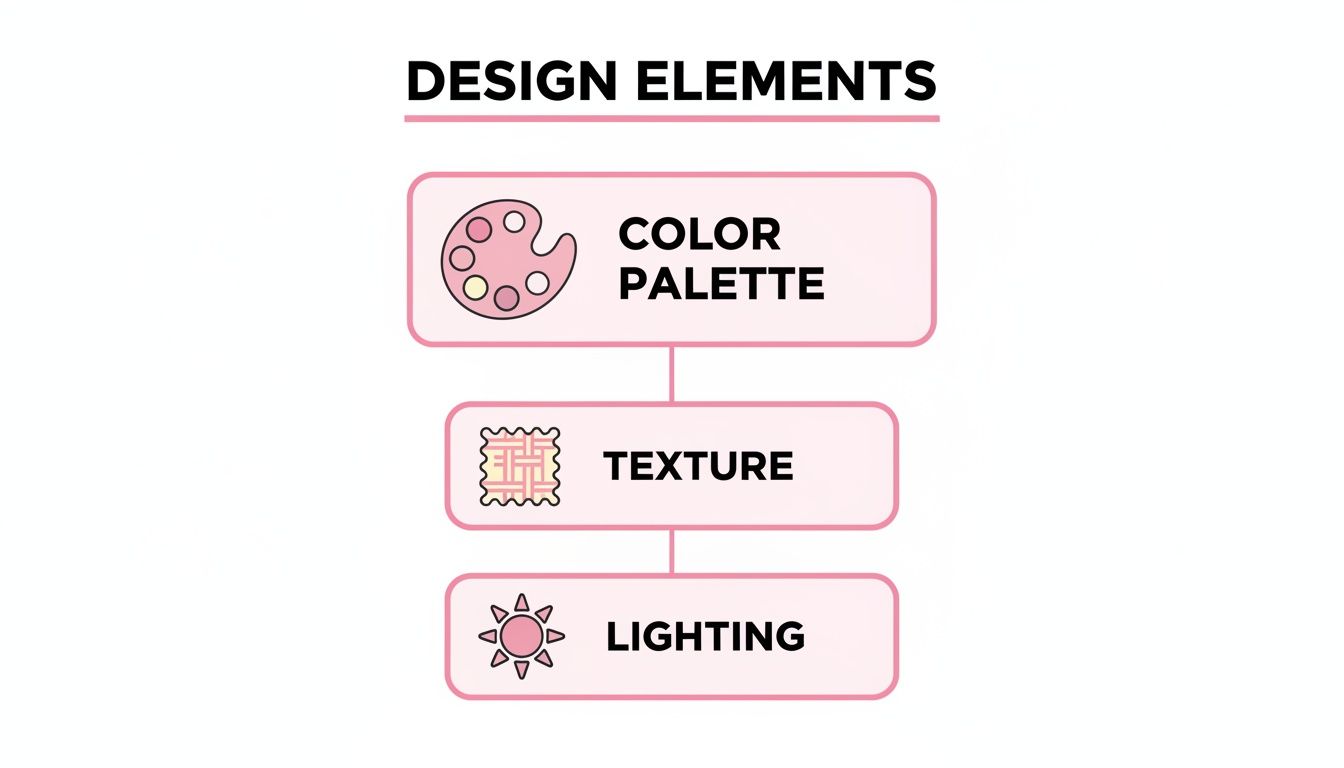
As you can see, a killer pastel pink identity isn't just about slapping the color on everything. It's about getting the color, texture, and lighting to work together in harmony to create a complete vibe.
The Rise of Millennial Pink
The term "Millennial Pink" really hit its stride in 2017, racking up over 32,000 online mentions that year alone. It was a cultural moment. Its rise was kicked off by a few key events, like the distinct aesthetic of Wes Anderson's 2014 film The Grand Budapest Hotel and Pantone picking "Rose Quartz" as a Color of the Year in 2016.
Millennial Pink’s success wasn't an accident. It was a conscious move away from traditional gendered colors, giving everyone a neutral, sophisticated, and calming alternative that just felt right for a generation looking for something more authentic.
By understanding where this trend came from, brand builders can use pastel pink in a much smarter way today. The goal isn't just to copy a look from 2017. It's about tapping into the core emotions the color brings out. You're leveraging a proven psychological connection to build a genuine relationship with your audience. That’s why getting a solid brand kit together with these principles in mind is so important for staying consistent. You can learn more about how to do that here: https://bulkimagegeneration.com/blog/en/tutorials/brand-kit-based.
The lessons from its peak popularity show that this aesthetic is still evolving. While the exact shade of Millennial Pink might feel a little dated now, the core ideas—soft, authentic, emotionally-driven branding—are more relevant than ever.
Don't let the soft, gentle vibe of pastel pink fool you. While it feels like a universal language, its meaning can do a complete 180 depending on where you are in the world. If you're creating for a global audience, you have to get a handle on its different cultural personalities.
In the West, we often jump straight to ideas of softness and femininity, but that’s just one chapter in a much bigger story. For any creator, marketer, or designer, understanding the global context is everything. It’s the difference between your visuals connecting and completely missing the mark.
Pink Beyond Western Borders
Just look at Japan. The connection to pink there is incredibly deep, blending ancient history with the hyper-modern. It’s the signature color of the globally famous "kawaii" (cute) culture, which is all about celebrating the adorable and childlike. This aesthetic uses pastels to create a feeling of innocence that’s totally distinct from what you see in the West.
But this isn't some new fad. The cultural love for pink in Japan goes back centuries, long before it was ever a trend in Europe.
The meaning of a color is never fixed. It’s a reflection of a culture's history, values, and social movements, constantly evolving and taking on new significance over time.
This history gives pastel pink a unique weight in Japanese visual culture, showing up everywhere from high fashion and branding to art and anime.
From Aesthetics to Activism
The story gets even more interesting when you see how pink has been adopted by modern social movements. The color has been completely reclaimed as a symbol of protest and empowerment, proving it can be both gentle and fierce.
One of the most unforgettable examples was the 2017 Women's March. That sea of bright pink "pussy hats" became an instant, iconic symbol of solidarity and resistance. It was a powerful moment that showed a color once tied to quiet domesticity could become a bold political statement. The pastel pink aesthetic is anything but one-dimensional.
Believe it or not, the modern obsession with pink can be traced all the way back to Japan's 8th-century Heian court, where men and women both wore shades of pink—nearly 1,200 years before it caught on in Europe. You can dive deeper into pink's wild journey from pretty to punk on Sothebys.com.
How to Create Pastel Pink Visuals with AI

Alright, you've got the theory down. Now for the fun part: actually making the visuals. Thanks to AI image generators, you no longer need to be a professional photographer or graphic designer to churn out a steady stream of stunning, on-brand content.
The trick is learning how to "speak" the AI's language. Just asking for a "pastel pink image" won't cut it. You have to get specific about the mood, the light, the textures, and the composition. Think of yourself as an art director giving very clear instructions—the more precise you are, the closer the AI will get to that perfect image you see in your head.
Building the Perfect AI Prompt
A great AI prompt is all about layering your ideas. You start with a simple subject and then build on it, adding keywords that bring in all those core visual elements we've been talking about. This gives you way more control over what the AI spits out.
Here’s a simple structure that just works:
- Start with the Core Subject: Just say what you want to see. For example,
a flat lay of a minimalist desk. - Define the Aesthetic: Now add the main theme. It becomes
a flat lay of a minimalist desk, pastel pink aesthetic. - Layer in the Details: This is where the magic happens. Weave in keywords for lighting, texture, and mood. The prompt evolves into
a flat lay of a minimalist desk, pastel pink aesthetic, soft natural light from a window, smooth matte ceramic mug, delicate silver pen, dreamy and serene mood.
See the difference? That layered approach turns a vague idea into a specific command, giving you a much more polished and accurate image. If you’re ever stuck for ideas, playing around with a free AI image prompt generator can show you just how much a few keywords can change the entire vibe. Check out one here: https://bulkimagegeneration.com/tools/free-ai-image-prompt-generator
AI Prompt Formulas for Pastel Pink Visuals
To make things even easier, I've put together a few prompt formulas. These are structured templates you can use with different AI platforms to get consistent results for specific use cases, whether it's for social media or a product shot.
| Use Case (e.g., Social Media, Product Shot) | Core Prompt Structure | Example Modifiers (e.g., --style raw, --ar 9:16) |
|---|---|---|
| Social Media Feed | Lifestyle photograph of [subject] in a [setting], soft pastel pink and cream color palette, gentle morning light, peaceful and calm atmosphere | --ar 4:5, --style raw, shot on film |
| Product Mockup | Clean product shot of [product] on a simple pedestal, monochromatic blush pink background, soft studio lighting, minimalist and elegant | --ar 1:1, --v 6.0, high detail, no harsh shadows |
| Website/Brand Banner | Abstract background with gentle waves of pastel pink, peach, and lavender, soft gradient, ethereal and dreamy texture, minimalist | --ar 16:9, calming energy, --s 250 |
| Story/Reel Background | Aesthetic vertical shot of [scene], muted pastel pink tones, soft focus background, dreamy and romantic mood, cinematic | --ar 9:16, light bokeh, film grain |
These formulas are just a starting point. Swap out the details, experiment with the modifiers, and you'll quickly build a library of prompts that perfectly capture your brand's unique take on the pastel pink aesthetic.
The secret to great AI art isn't just knowing what to ask for—it's knowing how to ask. Specificity is your greatest tool for turning a vague idea into a polished, professional visual.
And don't forget about video. Once you have your static images, you can easily turn them into dynamic content. An AI Reel Generator can take your visuals and quickly create engaging clips perfect for social media. By getting comfortable with these tools and techniques, you'll be able to create a massive library of beautiful, on-brand visuals without breaking a sweat.
Got Questions About the Pastel Pink Aesthetic? We’ve Got Answers.
Even after you get the hang of the core elements, a few practical questions always seem to pop up when you start creating. This is where we clear up any of those lingering "what ifs" and make sure you can move forward with total confidence.
Think of this as the final polish on your knowledge. We’ll tackle the common sticking points—from color pairings to brand alignment—so your projects turn out just as beautiful and effective as you imagine.
What Colors Go Best with Pastel Pink?
This is probably the biggest hurdle. How do you pair colors with pastel pink without completely overpowering its soft, gentle vibe? The goal is always harmony, not competition. Honestly, sticking to a soft, desaturated palette is almost always your best bet.
Here are a few combinations that just work:
- Cream and Ivory: These warm whites create a seamless, cozy backdrop that lets the pink feel inviting, not stark.
- Soft Grays: A light, cool-toned gray brings a touch of modern sophistication and keeps the whole look from feeling overly sweet.
- Muted Sage or Mint Green: As a complementary color, a washed-out green adds a subtle, refreshing contrast that makes the pink pop in a really gentle way.
- Pale Gold or Champagne: If you’re aiming for a hint of luxury, metallic accents in pale gold or champagne add warmth and elegance without being loud.
The real secret is to keep a similar level of saturation across all your colors. If your pink is soft and muted, every other color in your palette should be, too.
Is the Pastel Pink Aesthetic Still Trendy?
Absolutely, but it’s grown up. The massive "Millennial Pink" wave from the mid-2010s has definitely settled down, but the core ideas behind the aesthetic—softness, authenticity, and minimalism—are more relevant than ever. It's less of a loud, in-your-face trend and more of a timeless, versatile style.
The pastel pink aesthetic has graduated from a fleeting trend to a classic design choice. It has staying power because it evokes a sense of calm and warmth—something everyone craves in a chaotic world.
Today, you’ll see it used in much more nuanced ways. A brand might use it as a subtle accent in their packaging or as the main color for a social media campaign trying to communicate gentleness and care. It’s no longer about jumping on a bandwagon; it’s about using it as a deliberate tool to set a specific mood.
Can Pastel Pink Work for Any Brand?
This is a critical question, and the short answer is no. While it's incredibly versatile, the pastel pink aesthetic isn't a one-size-fits-all solution. Its success hinges entirely on whether its emotional vibe aligns with your brand's core message.
It’s a perfect match for brands in spaces like:
- Wellness and Self-Care: The color’s calming nature is a direct reflection of the industry’s goals.
- Beauty and Skincare: It immediately brings to mind gentleness, cleanliness, and care.
- Boutique Fashion: It can communicate a sense of modern elegance and soft luxury.
- Artisan Goods: It often signals craftsmanship, high quality, and a personal touch.
But for a brand trying to project power, high-octane energy, or rugged durability, pastel pink would likely send the wrong message. Before you commit, just ask yourself this: "Does the feeling of 'soft, calm, and gentle' match the story my brand is trying to tell?" If the answer is a clear yes, you’ve probably found a great fit.
Ready to bring your pastel pink aesthetic to life? Bulk Image Generation provides the tools you need to create hundreds of stunning, on-brand visuals in seconds. Stop wrestling with prompts and start creating with our advanced AI. Explore our powerful features and begin your project today.