7 Essential Midjourney Art Styles to Master in 2025

Ryan Bennett • September 24, 2025
Explore the top 7 Midjourney art styles dominating 2025. Unlock photorealistic, anime, cyberpunk, and more with expert tips and prompt examples.
Midjourney has transformed the creative landscape, offering artists, designers, and hobbyists a powerful tool to bring their imaginations to life. But mastering this AI requires more than just a clever idea; it demands a deep understanding of its stylistic capabilities. The right art style can elevate a simple concept into a breathtaking visual, while the wrong one can leave it feeling flat and uninspired. This guide delves into seven essential Midjourney art styles that are defining digital art creation.
We will go beyond surface-level descriptions to provide a strategic breakdown of each style, analyzing its core features, tactical applications, and offering replicable prompting strategies. To further ignite your creativity and discover new ideas for your Midjourney explorations, you can explore various online platforms that offer excellent tools and sites for art prompt inspiration.
Whether you're designing game assets, creating marketing visuals, or exploring new artistic frontiers, this breakdown will equip you with the knowledge to generate stunning, intentional, and impactful images consistently. We will cover everything from Photorealistic Portraits and Anime to Surrealist and Art Nouveau styles, giving you the tactical insights needed to unlock your creative vision.
1. Photorealistic Portrait Style
Among the most impressive Midjourney art styles is its ability to generate photorealistic portraits. This style moves beyond simple illustration to create images that are nearly indistinguishable from professional photography. It excels at capturing the nuances of human features, including realistic skin textures with visible pores, authentic lighting that creates depth, and genuine facial expressions that convey emotion.
The key to mastering this style is using language borrowed directly from photography. Instead of just asking for a "photo of a person," you command the AI with the precision of a professional photographer. This specificity is what elevates the output from a simple digital image to a piece of hyper-realistic art.
Strategic Breakdown
The power of this style lies in its ability to produce high-quality, royalty-free images that serve a multitude of professional needs. For instance, a game developer can generate dozens of unique character portraits for a fraction of the cost and time of a traditional photoshoot. Likewise, a small business can create compelling visuals for a marketing campaign without hiring models or photographers. This makes it an invaluable tool for projects requiring realistic human faces.
Actionable Tips for Implementation
To achieve stunningly realistic portraits, integrate these specific elements into your prompts:
- Camera & Lens Specs: Reference specific camera models and lens types. For example, add terms like
shot on a Sony a7R IV, 85mm f/1.4 lens. - Lighting Descriptors: Define the light source to control mood and realism. Use phrases like
natural light,softbox studio lighting, orgolden hour. - Image Quality Keywords: Guide the AI to produce high-fidelity results with terms such as
8K,ultra-detailed, andhyperrealistic. - Photographer Styles: Emulate the work of famous photographers by including
in the style of Annie Leibovitzor another artist known for powerful portraiture.
The following summary box highlights the core components of this powerful Midjourney style.
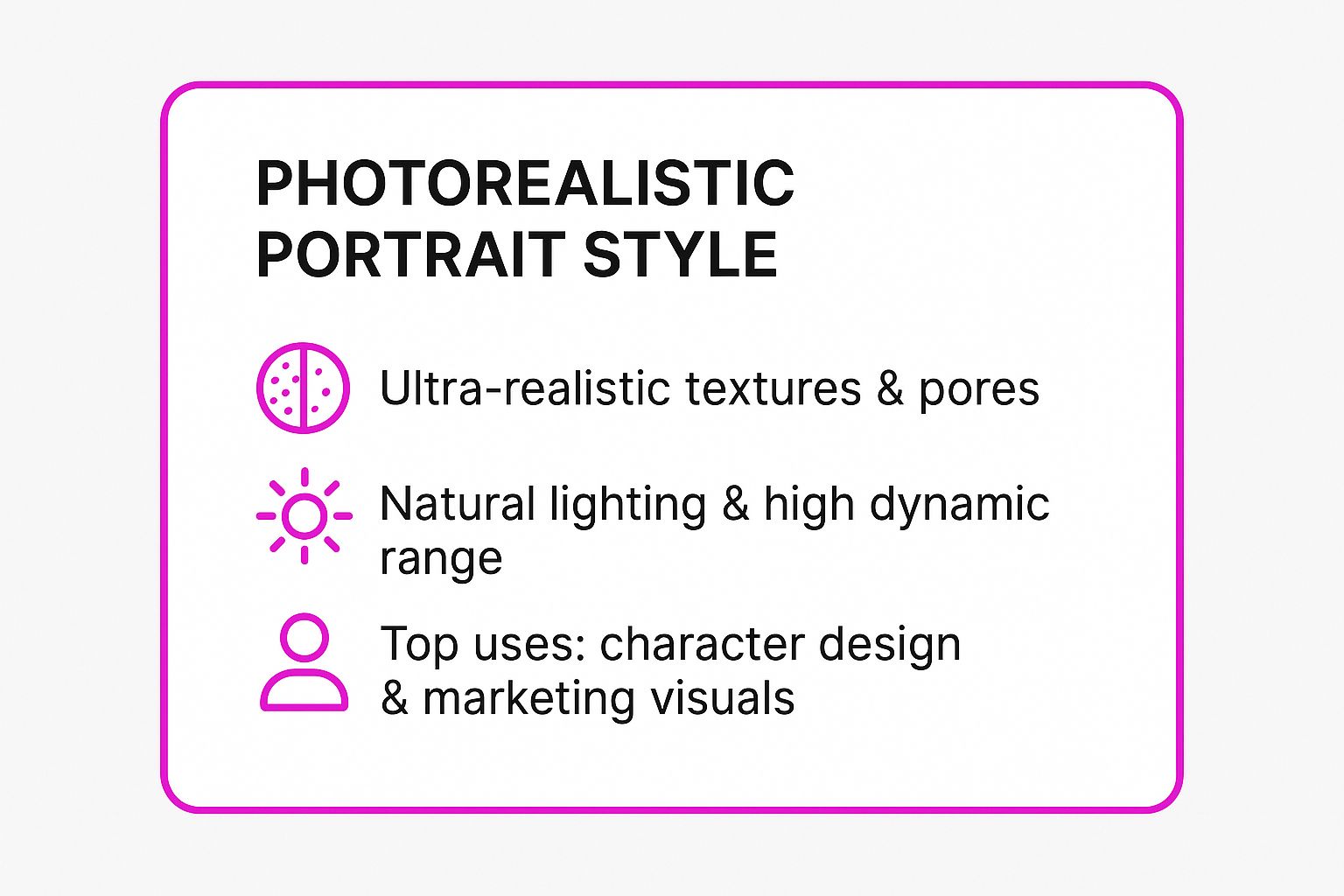
As the visualization shows, combining detailed texture prompts with sophisticated lighting commands is essential for creating top-tier character designs and marketing visuals. This strategic approach ensures your outputs are not just pictures, but compelling, lifelike portraits.
2. Anime/Manga Style
One of the most popular Midjourney art styles is its remarkable ability to replicate the aesthetics of Japanese anime and manga. This style captures the signature look of Japanese pop culture, characterized by large, expressive eyes, stylized character proportions, and bold, vibrant color palettes. It moves beyond simple cartoons to generate art that mirrors the quality and emotional depth found in professional anime productions and manga illustrations.
The key to achieving an authentic look is using language specific to the anime and manga world. Instead of a generic prompt like "anime girl," you guide the AI with terms that reference specific studios, artists, or artistic techniques. This level of detail is what transforms a basic digital drawing into a piece that feels like it was lifted directly from a beloved series.
Strategic Breakdown
The strength of this style lies in its capacity to produce high-quality, original character designs and illustrations for a wide range of creative and commercial projects. For instance, an indie game developer can generate a full roster of unique characters, complete with expressive portraits for dialogue scenes, at a tiny fraction of the usual cost. Similarly, a content creator can design a unique anime-style avatar for their social media profiles, or an author could illustrate an entire webcomic without needing traditional drawing skills.
Actionable Tips for Implementation
To generate stunning anime and manga-style images, integrate these specific elements into your prompts:
- Studio & Artist References: Name specific studios or directors to mimic their unique visual identity. Use terms like
in the style of Studio Ghibliorart by Makoto Shinkai. For a more detailed guide on a specific aesthetic, you can learn more about Ghibli-style AI art. - Art Medium & Technique: Define the artistic medium to control the final look. Include phrases such as
cel-shaded anime,watercolor illustration, ormanga screen tones. - Aesthetic & Genre Keywords: Guide the AI toward a specific sub-genre or mood. Use terms like
90s anime aesthetic,shounen action scene,slice-of-life, orcyberpunk anime. - Character Archetypes: Describe well-known character types to get more specific results. Prompts can include
tsundere character with pink hairorstoic shounen hero.
3. Cyberpunk Aesthetic
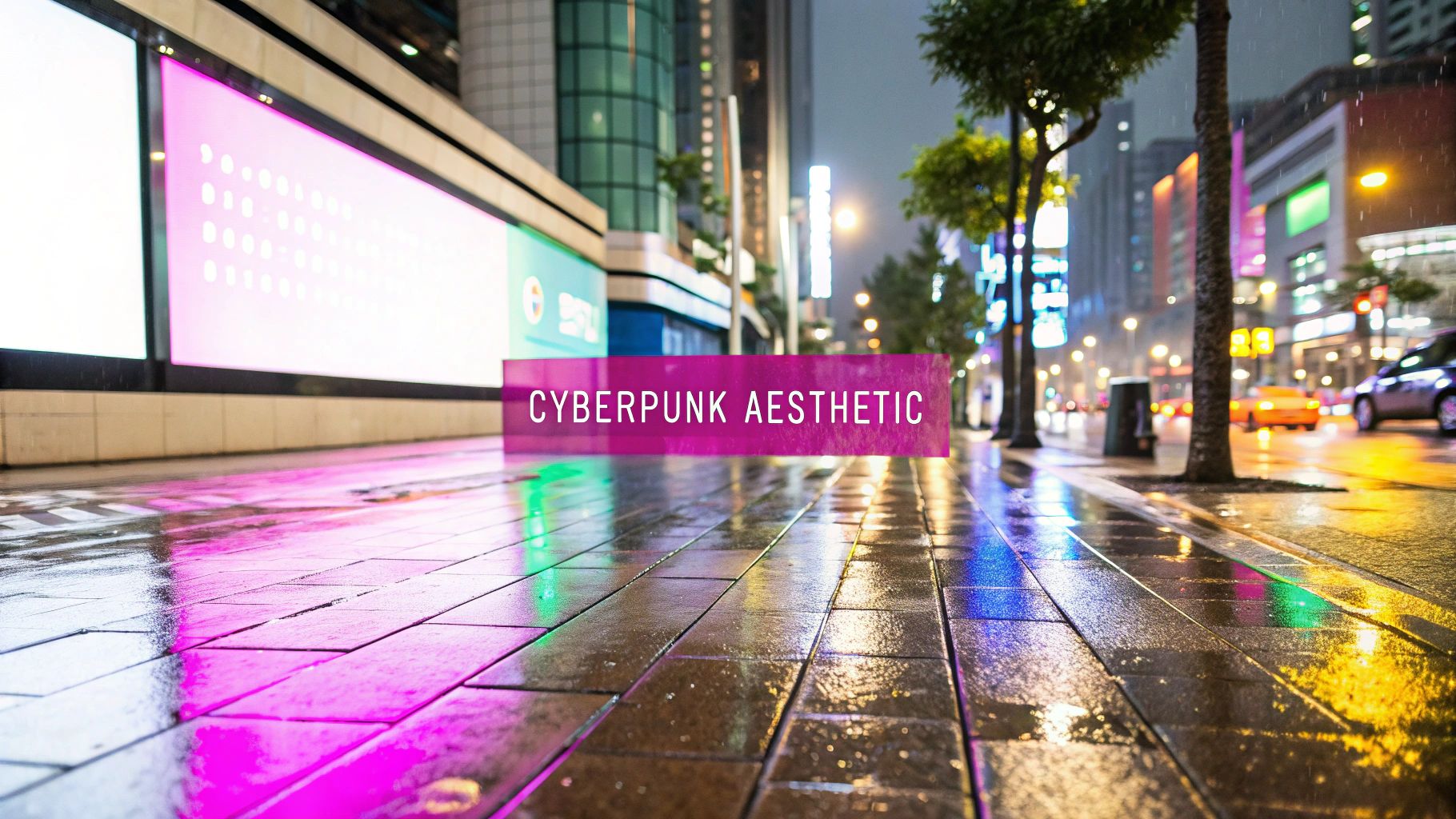
The Cyberpunk Aesthetic is one of the most visually striking Midjourney art styles, capturing a high-tech, low-life future. This style is defined by its fusion of advanced technology with gritty, dystopian urban landscapes. It often features neon-drenched streets, towering skyscrapers, cybernetic enhancements, and a general sense of societal decay juxtaposed with technological marvels.
Inspired by classics like Blade Runner and Akira, this aesthetic creates immersive, atmospheric scenes that are rich with narrative. The key is to blend noir-inspired darkness with vibrant, artificial light sources, creating a world that feels both futuristic and unsettling. This style is perfect for telling complex stories through a single, powerful image.
Strategic Breakdown
The power of the cyberpunk style lies in its ability to quickly establish a specific mood and setting, making it incredibly useful for concept art, world-building, and marketing. A video game developer can rapidly prototype character designs or environmental concepts, while a musician producing electronic music can generate a compelling album cover that perfectly matches their sound. The high contrast and vibrant colors also make these images stand out on social media feeds and promotional materials, grabbing audience attention instantly.
Actionable Tips for Implementation
To generate compelling cyberpunk visuals, integrate these specific elements into your prompts:
- Atmospheric Descriptors: Set the scene with terms like
dystopian megacity,rain-slicked streets,noir aesthetic, andgritty urban environment. - Lighting & Color: Define the signature look using phrases such as
vibrant neon lighting,holographic advertisements, andcontrasting magenta and cyan colors. - Technological Elements: Add futuristic details with keywords like
cybernetic implants,flying vehicles,glowing data streams, andfuturistic fashion. - Artistic References: Evoke the genre's icons by including prompts like
in the style of Blade Runner 2049orinfluenced by Ghost in the Shell.
By combining these specific prompts, you can guide Midjourney to produce deeply atmospheric and detailed cyberpunk worlds, transforming a simple idea into a visually stunning piece of sci-fi art. This approach is essential for anyone looking to create evocative and memorable imagery within this popular aesthetic.
4. Oil Painting Classical Style
Midjourney offers the remarkable ability to channel the great masters, allowing users to create images in a classical oil painting style. This approach emulates the rich textures, dramatic lighting, and meticulous detail characteristic of art from periods like the Renaissance and Baroque. It moves beyond simple filters, digitally recreating the visible brushstrokes, canvas texture, and chiaroscuro techniques that define historical masterpieces.
The key to achieving this look is to use prompts grounded in art history. Instead of a generic "painting of a person," you instruct the AI with the vocabulary of an art historian or a classical painter. This level of detail is what transforms a standard digital image into a piece that echoes the depth and emotional gravity of a museum-quality oil painting.
Strategic Breakdown
The power of this style lies in its capacity to evoke a sense of timelessness, elegance, and authority. For luxury brands, an image in the style of Rembrandt can lend a product an air of heritage and sophistication. Similarly, creators of historical content, such as documentary filmmakers or authors, can generate stunning visuals that accurately reflect a specific era without the high cost of commissioning an artist. This makes it an invaluable tool for projects that require a classical, high-art aesthetic.
Actionable Tips for Implementation
To generate breathtaking images in the classical oil painting style, integrate these specific elements into your prompts:
- Master Artist References: Name specific artists to guide the AI’s technique. For example, add phrases like
in the style of Caravaggiooremulating the brushwork of Rembrandt. - Art Historical Terms: Use terminology from the art world to define the mood and composition. Include words like
chiaroscuro,sfumato,Baroque period, ortenebrism. - Medium & Canvas Details: Specify the physical properties of the painting for added realism. Use terms such as
oil on canvas,visible craquelure, andthick impasto brushstrokes. - Period-Appropriate Elements: Ensure the subject matter aligns with the style. Describe
17th-century Dutch attire, aRenaissance-era still life, ora Rococo portrait setting.
By combining these elements, you can effectively direct Midjourney to produce compelling and authentic-looking classical artworks. For those looking to explore this further, you can learn more about AI art generation techniques to refine your approach. This strategic prompting turns the AI into a digital apprentice, ready to execute your classical vision.
5. Minimalist Vector Art
Among the most versatile Midjourney art styles is Minimalist Vector Art, which excels at producing clean, modern visuals. This style strips away complexity in favor of clarity, using basic geometric shapes, limited color palettes, and generous negative space to create graphics that are both simple and impactful. It’s a design philosophy that prioritizes function and elegance, resulting in images that communicate ideas with remarkable efficiency.
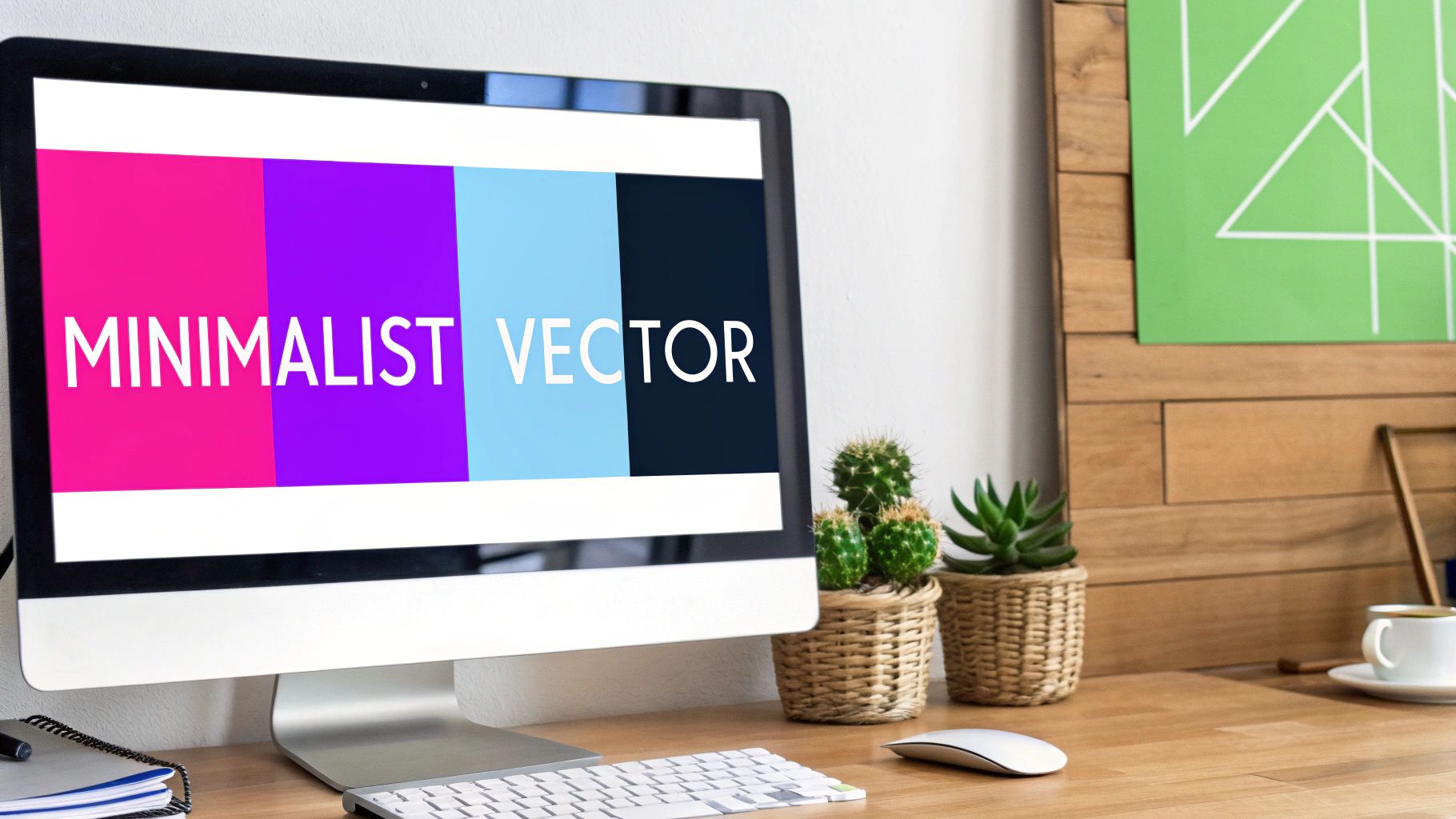
The essence of this style is precision and simplicity, a concept heavily influenced by principles from modern design movements and corporate branding. Instead of rich detail, it leverages strong compositions and thoughtful color choices to create compelling visuals that are easily scalable and universally understood.
Strategic Breakdown
The primary advantage of Minimalist Vector Art is its immediate legibility and professional aesthetic, making it ideal for corporate communications and user interface design. A business can use this style to generate a cohesive set of icons for its app or website, ensuring a consistent and modern user experience. Similarly, marketers can create sleek infographic elements or social media templates that align with a clean brand identity, communicating complex information in a visually digestible format.
The scalability of vector graphics means these assets can be resized for any purpose without losing quality, from a small app icon to a large billboard. If you're interested in delving into the creation of minimalist vector art, understanding the available best vector design software can be incredibly helpful. This makes it a highly practical and cost-effective choice for branding and digital marketing needs.
Actionable Tips for Implementation
To generate effective minimalist vector graphics, focus your prompts on clarity and structure:
- Specify the Style: Begin with clear descriptors like
minimalist vector illustration,flat icon design, orsimple line art. - Define the Color Palette: Guide the color scheme to maintain simplicity. Use prompts such as
limited color palette,monochromatic, or specify a few colors likeusing only blue and white. - Emphasize Simplicity: Add keywords that reinforce the minimalist aesthetic, such as
clean lines,geometric shapes,negative space, anduncluttered. - Reference Design Systems: For a corporate feel, invoke established design philosophies by adding
in the style of Google Material Designorflat 2.0 design.
6. Surrealist Dream-like Style
One of the more imaginative Midjourney art styles is its ability to generate surreal, dream-like scenes that defy logic and convention. This style draws inspiration from the 20th-century surrealist movement, creating bizarre, fantastical imagery by blending mundane reality with the impossible. It excels at producing unexpected juxtapositions, distorted perspectives, and illogical compositions that challenge the viewer's perception.
The key to mastering this style is to think like a surrealist artist, combining seemingly unrelated concepts to evoke a sense of mystery, wonder, or unease. Instead of prompting for a logical scene, you guide the AI to construct a visual narrative from the depths of the subconscious. This creative freedom is what transforms a simple prompt into a piece of thought-provoking conceptual art.
Strategic Breakdown
The power of this style lies in its ability to create deeply symbolic and visually arresting content that immediately captures attention. For example, a musician can generate a unique, dream-like album cover for a progressive rock or ambient record. Similarly, authors and publishers can create stunning fantasy book illustrations that perfectly capture the otherworldly nature of their stories. It is an invaluable tool for any project requiring visuals that are abstract, metaphorical, or related to psychology and dreams.
Actionable Tips for Implementation
To generate compelling surrealist images, integrate these specific elements into your prompts:
- Combine Unexpected Elements: Creatively fuse unrelated objects and environments. For instance, prompt for an
ocean made of liquid clocksora cityscape growing from a giant, open book. - Use Dream-like Language: Employ descriptive words that evoke a subconscious state. Use phrases like
dreamscape,ethereal atmosphere,liminal space, andsubconscious thoughts visualized. - Reference Surrealist Masters: Emulate the techniques of famous artists to guide the AI’s aesthetic. Include terms like
in the style of Salvador Dalí,with the unsettling mood of Giorgio de Chirico, orinspired by René Magritte. - Play with Scale and Perspective: Distort reality by manipulating size and viewpoints. Try prompts such as
a miniature elephant sipping tea in a giant teacuporimpossible Escher-like architecture.
Exploring various combinations can be complex, but an AI image prompt generator can help you structure these creative ideas effectively. This approach ensures your outputs are not just random, but intentionally bizarre and conceptually rich dreamscapes.
7. Art Nouveau Ornamental Style
One of the most elegant Midjourney art styles is its ability to generate works in the Art Nouveau Ornamental Style. This aesthetic, which flourished in the late 19th and early 20th centuries, is defined by its use of long, sinuous, organic lines and nature-inspired motifs. Midjourney excels at capturing this elegance, producing intricate designs with flowing curves and sophisticated decorative flourishes reminiscent of artists like Alphonse Mucha.
The key to achieving this look is to guide the AI with prompts that emphasize fluidity, natural forms, and elaborate ornamentation. By focusing on the core principles of the Art Nouveau movement, you can create images that are not just decorative but also carry a sense of dynamic, graceful movement. This makes it an ideal style for projects that require a touch of historical sophistication and artistic flair.
Strategic Breakdown
The strength of the Art Nouveau style lies in its ability to elevate ordinary designs into works of art. It is exceptionally well-suited for branding and design projects that aim to convey luxury, elegance, and a connection to nature. For example, a winery can generate stunning wine labels that feel both classic and unique. Similarly, a wedding planner can create bespoke invitation suites that offer a romantic and timeless appeal, setting a sophisticated tone for the event.
Actionable Tips for Implementation
To generate breathtaking Art Nouveau designs, integrate these specific elements into your prompts:
- Flowing, Organic Shapes: Use terms like
whiplash curves,sinuous lines, andorganic formsto guide the AI's composition. - Nature-Based Color Palettes: Specify colors drawn from nature to maintain authenticity. Phrases like
muted earth tones,pale pastels, andrich jewel toneswork well. - Decorative Border Elements: Explicitly ask for intricate details. Add prompts such as
ornamental border with floral motifsorintricate filigree frame. - Reference Specific Artists: Emulate the masters of the movement by including
in the style of Alphonse Muchaorinspired by Gustav Klimtto direct the AI's aesthetic.
The following summary box highlights the core components of this powerful Midjourney style.
As the visualization demonstrates, combining commands for organic lines with references to iconic artists is crucial for creating high-end packaging designs and decorative posters. This strategic approach ensures your outputs capture the refined and timeless beauty of the Art Nouveau era.
Midjourney Art Styles Comparison Table
| Style | Implementation Complexity | Resource Requirements | Expected Outcomes | Ideal Use Cases | Key Advantages |
|---|---|---|---|---|---|
| Photorealistic Portrait | High - requires precise prompts | High - detailed rendering, lighting setup | Ultra-realistic human portraits with natural skin and lighting | Character design, marketing, professional portraits | Convincing realism, professional quality, great for marketing |
| Anime/Manga Style | Moderate - stylized but simpler forms | Moderate - focus on clean lines and color | Distinctive anime characters with expressive eyes and vibrant colors | Indie games, social media avatars, webcomics, NFTs | Popular style, versatile, appeals to large fanbase |
| Cyberpunk Aesthetic | High - complex lighting and effects | High - neon/glow effects, multifaceted layers | Futuristic, neon-lit sci-fi scenes with dark, moody atmosphere | Sci-fi concept art, gaming, music covers | Visually striking, popular in tech/gaming, atmospheric |
| Oil Painting Classical | High - requires knowledge of classical techniques | Moderate to high - texture and light simulation | Rich, textured artworks emulating Renaissance/Baroque paintings | Fine art, book illustrations, luxury branding | Timeless elegance, sophisticated, appeals to traditional art lovers |
| Minimalist Vector Art | Low to moderate - simple shapes and colors | Low - fewer details, flat design | Clean, simple, and modern visuals with clear composition | Branding, UI, infographics, social media graphics | Versatile, easy reproduction, modern and timeless |
| Surrealist Dream-like Style | High - creative and abstract composition | Moderate to high - imaginative, complex scenes | Dreamlike, impossible scenes blending reality and fantasy | Conceptual art, album covers, fantasy illustrations | Highly creative, attention-grabbing, great for abstract projects |
| Art Nouveau Ornamental | High - intricate patterns and flowing lines | Moderate - detailed decorative elements | Elegant, nature-inspired ornamental visuals with sophisticated composition | Luxury branding, wedding stationery, decorative art | Elegant, timeless, great for premium, ornamental use |
From Prompt to Production: Scaling Your Creative Workflow
We've journeyed through a diverse landscape of creative possibilities, exploring seven distinct and powerful Midjourney art styles. From the breathtaking detail of Photorealistic Portraits to the elegant linework of Art Nouveau, each style offers a unique visual language. Understanding these different aesthetics is the first step toward becoming a true AI art director, capable of selecting the perfect visual tone for any project, whether it's for marketing, education, or brand development.
The core lesson from our exploration is the power of specificity. Moving beyond simple prompts like "a cyberpunk city" to more nuanced commands that reference specific artists, camera lenses, lighting techniques, and artistic movements is what separates generic outputs from truly compelling creations. This strategic approach to prompt engineering gives you granular control over the AI, allowing you to guide it toward your precise creative vision.
Key Takeaways for Mastering Midjourney Styles
As you integrate these techniques, remember these foundational principles:
- Combine and Conquer: Don't be afraid to mix elements from different styles. A Surrealist concept rendered in an Oil Painting style or a Minimalist Vector character placed in a Cyberpunk environment can lead to groundbreaking and memorable visuals.
- Iterate with Intent: Your first generation is rarely your last. Use the initial output as a canvas for refinement. Tweak your prompts, add negative keywords, or use parameters like
--styleand--stylizeto systematically hone in on the perfect result. - Build a Style Library: Keep a record of prompts that produce results you love. This personal "style guide" becomes an invaluable resource, allowing you to replicate successful aesthetics quickly and maintain visual consistency across projects.
The Challenge of Scale in Creative Production
Mastering individual Midjourney art styles is a significant achievement, but the next frontier for many creators is scale. Manually generating images one by one is simply not feasible when you need to create hundreds of unique assets for a video game, populate a month's worth of social media content, or produce a full catalog of product mockups. This is where the workflow bottleneck often appears, trading creative time for repetitive manual tasks.
To truly scale your creative output without sacrificing quality, you need a more efficient system. The goal is to transition from a single-prompt-at-a-time mindset to a batch-production workflow. This involves leveraging tools that can interpret your creative goals and automate the generation process, freeing you to focus on high-level strategy and final refinements. This shift is critical for small business owners, marketers, and agencies who need to produce a high volume of quality, on-brand content consistently.
Ready to move beyond single-image generation and scale your creative vision? Bulk Image Generation is the perfect platform to apply your knowledge of art styles to large-scale projects, generating hundreds of customized images in minutes. Streamline your entire workflow and bring your most ambitious ideas to life by visiting Bulk Image Generation today.