
How to Write a Creative Brief That Gets Results

Ryan Bennett • July 26, 2025
Learn how to write a creative brief that inspires great work and aligns your team. Get actionable advice, templates, and expert insights.
Writing a creative brief is all about capturing your project's soul on paper. You're defining the goals, target audience, key message, and deliverables in one go-to document. Think of it less like a form to fill out and more like a strategic map that guides your entire creative team, ensuring everyone is on the same page from day one.
The Blueprint for Every Great Campaign
Before we get into the nitty-gritty of how to write a brief, we need to talk about why it’s so critical. A creative brief is so much more than a document; it's the bedrock of your entire project. It serves as the single source of truth, pulling your creative team, marketers, and key stakeholders into perfect alignment right from the start.
This alignment is what separates a killer campaign from one that just fizzles out.
A sharp, clear brief is your best defense against endless revisions, frustrating miscommunications, and a final product that’s just… off. When your team has a solid blueprint, they can pour all their energy into what they do best—being creative—instead of trying to read your mind. It’s the essential first step toward creating work that doesn’t just look good but actually hits your business goals.
Why a Creative Brief Is Non-Negotiable
A well-crafted brief is the cornerstone of any serious marketing or advertising project. It’s there to clearly define the scope, the audience, and all the essential details like timelines and budget. This structure is what keeps everyone pulling in the same direction.
The real magic of a creative brief is its ability to translate a business problem into a creative challenge. It empowers your team by providing strategic guardrails, not restrictive handcuffs.
To see this in action, it's incredibly helpful to look at how other brands do it. Checking out a few different logo design brief examples can give you a real feel for how to frame objectives and define an audience in a way that sparks great ideas.
Putting in this work upfront pays off big time. It kills the ambiguity that poisons creative work. The act of writing the brief forces you to sharpen your own thinking and get every stakeholder to sign off before a single design is mocked up or a line of copy is written. This is precisely where so many projects derail—a fuzzy start leads to a diluted, unfocused final product. And as technology evolves, this clarity becomes even more crucial. Our guide on AI marketing software explores how new tools can help, but they all depend on a strong, clear direction.
Simply put, a strong brief is your best defense against project chaos.
To help you get started, here’s a quick-glance table breaking down the absolute must-haves for any effective creative brief.
Core Components of an Effective Creative Brief
| Component | Purpose |
|---|---|
| Project Background | Sets the stage. Why are we doing this now? What’s the context? |
| Business Objectives | What business goal does this solve? (e.g., Increase sales by 15%, boost sign-ups) |
| Target Audience | Who are we talking to? Get specific with demographics and psychographics. |
| Key Message | What is the single most important thing we need to communicate? |
| Tone of Voice | How should we sound? (e.g., Witty, authoritative, empathetic, playful) |
| Deliverables & Specs | What are we making? (e.g., 3 social media videos, 5 blog posts, a landing page) |
| Timeline & Budget | When is it due and how much can we spend? Be realistic. |
| Mandatories & Restrictions | What must be included or avoided? (e.g., Logos, legal disclaimers, brand colors) |
Nailing these components doesn't just make the creative team's job easier; it ensures the final product is sharp, on-brand, and actually works.
Nail Your Project’s Core Objective

Every great project I’ve ever been a part of started with one thing: a crystal-clear goal. This objective becomes the "North Star" for your creative brief, the single point of truth that guides every decision, from the first brainstorm to the final deliverable.
Without that sharp focus, even the most brilliant teams end up adrift. They might create something beautiful, but it won’t solve the actual business problem. And that’s a waste of everyone’s time and money.
So, the very first thing we need to do is get past vague wishes like "increase sales" or "boost brand awareness." These are fine long-term ambitions, but they’re far too fuzzy to guide a creative team. Your objective needs to pinpoint the specific business problem you're trying to solve right now.
Think of it like a doctor diagnosing an illness before writing a prescription. Is the issue that people don’t know your product exists? Or do they know about it but think it’s not for them? These are two completely different problems, and they demand completely different creative solutions.
Get Specific: Turning Vague Goals into Actionable Missions
To write an objective that actually works, you have to make it specific and measurable. A weak objective is a passive wish; a strong one is an active mission.
Let's break down how to transform a common, fuzzy goal into something a creative team can really sink their teeth into.
- The Vague Goal: We need to increase sales.
- The Actionable Objective: We need to generate a 15% increase in online sales for our new skincare line by driving traffic to the product page from a targeted social media campaign over the next three months.
See the difference? This new version is powerful because it gives us all the critical details. It defines what success looks like (15% sales increase), who we're focusing on (the new skincare line), how we'll do it (social campaign), and when it needs to happen (next three months). This clarity kills the guesswork and focuses creative energy where it counts.
A great objective doesn’t just state a goal; it frames the challenge. It tells your team not just what to do, but why it matters and what winning looks like in tangible terms.
Find the Problem Hiding Behind the Goal
Always ask yourself: what is the fundamental business problem we are trying to solve? When you state this problem clearly, you give your creative team invaluable context. They're no longer just making an ad; they're solving a real-world business challenge.
For instance, imagine you're launching a new eco-friendly cleaning product. The creative direction will be entirely different depending on the core problem.
-
Problem 1: Lack of Awareness. "Our target audience of environmentally-conscious millennials doesn't even know our product exists. Our objective is to generate 5,000 new trial sign-ups by introducing the brand and its core benefits through an engaging video series on Instagram and TikTok."
-
Problem 2: Perceived Ineffectiveness. "Consumers see 'natural' cleaners and assume they don't work as well as harsh chemicals. Our objective is to shift this perception by creating a content series that demonstrates our product’s power, aiming for a 25% lift in positive sentiment on social media."
Each problem statement points to a totally different creative path. The first calls for a splashy introduction, while the second demands a convincing demonstration.
By defining the core problem and setting a measurable objective, you’re laying the strategic foundation for truly impactful creative work. Honestly, this is the most important part of learning how to write a creative brief that actually gets results.
Crafting a Vivid Audience Portrait

You can't have a meaningful conversation with a stranger. It’s the same with a creative campaign—you can’t connect with an audience you don’t really get. This is exactly where a lot of projects fall flat; they aim for a vague demographic instead of a real, breathing person.
Mastering the audience portrait is probably the most critical part of writing a great creative brief. The whole point is to ditch generic labels like "millennials" or "small business owners" and build a persona so rich and detailed it feels like you know them. This persona becomes the stand-in for your ideal customer, giving your creative team someone real to talk to.
Moving From Demographics to Psychographics
Demographics give you the who. These are the basic, necessary facts: age, gender, location, income. They're a good starting point, but they don't tell you the whole story. Not even close.
Psychographics, on the other hand, tell you the why. This is where the real magic happens.
- Values: What do they actually believe in? (Think sustainability, family, or community.)
- Pain Points: What keeps them up at night? (Maybe it's "I never have enough time," or "I'm totally overwhelmed by all this new tech.")
- Motivations: What really drives their decisions? (Is it a desire for status, a need for security, or just a love of convenience?)
- Aspirations: Who are they trying to become? (A respected leader in their field? A healthier, more active person?)
When you combine these, a character starts to emerge. For example, you’re no longer targeting "women aged 25-40." Instead, you’re talking to "Chloe, a 32-year-old project manager who values her work-life balance, feels anxious about her financial future, and gets excited by products that make her hectic schedule feel simpler."
A detailed persona transforms your target audience from a faceless statistic into a human being. It ensures that every creative decision—from the headline to the color palette—is made with a specific person in mind.
Ground Your Portrait in Real Data
Assumptions are the absolute enemy of a great creative brief. To build an audience portrait that's actually useful, you need to ground it in solid evidence. Guesswork just doesn't cut it anymore; data-driven approaches are the global standard for a reason.
A 2019 analysis drove this home by showing the power of building detailed consumer profiles—or 'pen portraits'—to nail audience targeting. It’s all about segmenting people by their behaviors, preferences, and attitudes. This helps marketing teams visualize what consumers need and craft messages that genuinely connect. It’s a process that makes sure the creative work is relevant and effective, with data as the ultimate benchmark. You can learn more about this data-driven approach on how to write a great brief with GWI.
Where to Find Audience Insights
Don't worry, gathering this information doesn't have to be a massive, expensive project. There are plenty of accessible places you can look for rich, qualitative data right now.
Simple Ways to Gather Data:
- Customer Surveys: Use free tools like SurveyMonkey or Google Forms to ask your existing customers direct questions. What are their biggest challenges? What are their goals? Just ask.
- Social Media Listening: Hang out where your audience hangs out online. Pay attention to the comments, questions, and conversations. What kind of language do they use? What are their biggest complaints?
- Review Mining: Go read the reviews for your products and your competitors' products. These are absolute goldmines of honest feedback. You'll find pain points and desires phrased in your customers' own words.
- Sales Team Feedback: Your sales team is on the front lines every single day. Talk to them. Ask about the most common questions they get, the objections they have to overcome, and the success stories they hear from prospects.
Doing this bit of research ensures your brief is rooted in reality, not fantasy. It empowers your creative team to speak directly to the heart of your audience's world.
Translating Strategy Into Creative Inspiration

This is where the real magic happens. A great brief doesn't just rattle off facts and figures; it weaves them into a narrative that actually sparks ideas. You’ve already nailed down your objective and audience. Now it's time to translate that strategic foundation into something your creative team can really sink their teeth into.
The goal isn't to tell them exactly what to create. That’s a surefire way to kill innovation. Instead, you’re building strategic guardrails—a defined space where they have the freedom to do their best work. Think of it as framing the problem so compellingly that the solution feels like an obvious, brilliant discovery.
Articulating the Core Message
Your key message is the one single, solitary idea you need to communicate. Forget taglines and headlines for a moment; this is the core truth that holds the entire campaign together. I always ask myself this: If our audience only remembers one thing from this, what absolutely must it be?
- A weak message sounds like this: "Our new software is efficient and easy to use."
- A strong message sounds like this: "Our new software gives you back 5 hours every week, so you can focus on growing your business, not just managing it."
See the difference? The second example is powerful because it connects a feature (efficiency) directly to a very human benefit (more time, less stress). That gives your creative team a much richer territory to play in.
The most inspiring briefs don't provide answers; they ask provocative questions. They challenge creatives to solve a puzzle, not just follow instructions. This simple shift in framing can ignite truly groundbreaking work.
Of course, all of this needs to be filtered through your established brand voice guidelines. This is non-negotiable. It ensures that no matter how innovative the concept, it always sounds authentically like you, building trust and consistency with every single touchpoint.
Setting the Tone and Competitive Edge
Tone of voice dictates how your message lands. Are you witty and a little rebellious? Or are you the reassuring, authoritative expert? You have to be specific here. "Friendly" is too vague. Try something like, "like a helpful expert who never uses jargon."
This is also where you need to get real about your competitors. Don't just list them out. Explain your unique angle. Are you the more affordable option? The premium, white-glove choice? The scrappy, innovative newcomer? This context is critical—it helps your team carve out a distinct and memorable space in your audience's mind. For anyone creating visual assets, knowing this edge is vital. You can find more tips on how to create stunning digital product images using AI generators that truly reflect your unique brand positioning.
Looking back, the most iconic global campaigns all started with well-crafted briefs. Think about Nike's 'Just Do It' or Spotify's 'Wrapped'—these didn't come from thin air. They began with briefs that masterfully transformed business goals into inspiring creative mandates. These documents were strategic blueprints, deeply exploring the core problem and the precise psychological triggers needed to connect with the audience on a massive scale.
Detailing Practical Project Requirements
A brilliant idea is only as good as its execution. Once you’ve figured out why you're doing the project and who it's for, it’s time to nail down the nitty-gritty. This is where you get practical about what needs to be created, by when, and for how much.
Getting this part right is your best defense against the dreaded scope creep and blown deadlines. I’ve seen it happen time and again: a team rushes into a project with a vague brief, only to get bogged down in confusion and rework later. Clarity here isn't just nice to have; it's essential.
Specifying Deliverables and Technical Needs
First off, let’s talk deliverables. Be ruthlessly specific. Just writing "social media assets" is a recipe for disaster. What does that even mean?
Instead, list every single item you expect the creative team to produce. Think like this:
- Three animated Instagram Stories (1080x1920 pixels, MP4 format, under 15 seconds)
- Five static Facebook ads (1200x628 pixels, JPG format, with less than 20% text overlay)
- One primary video for YouTube (16:9 aspect ratio, 4K resolution)
See the difference? Listing the exact quantity, format, and dimensions for each asset takes all the guesswork out of the equation. Designers and video editors can hit the ground running without having to pause and ask for technical specs halfway through. It ensures the final files are polished and ready to go live the moment they’re approved.
Setting the Timeline and Budget
Next up are the two big ones: your budget and your timeline. A timeline shouldn’t just be a final due date scribbled on a calendar. Break it down into key milestones. This simple act helps everyone track progress and, more importantly, spot potential delays before they snowball. The budget needs to be just as clear to guide decisions on everything from stock photo licensing to hiring freelance help.
A well-defined approval process is the secret ingredient for keeping a project on track. Clearly stating who reviews the work and by when prevents those frustrating bottlenecks and endless, soul-crushing feedback loops.
Take a minute to identify the key stakeholders who need to sign off on the work. Does the copy need the marketing manager's approval before it hits design? Does the CEO want final eyes on everything? Map this out. Creating a clear chain of command saves so much time and frustration.
This infographic breaks down the logical flow for nailing down your deliverables and timeline.
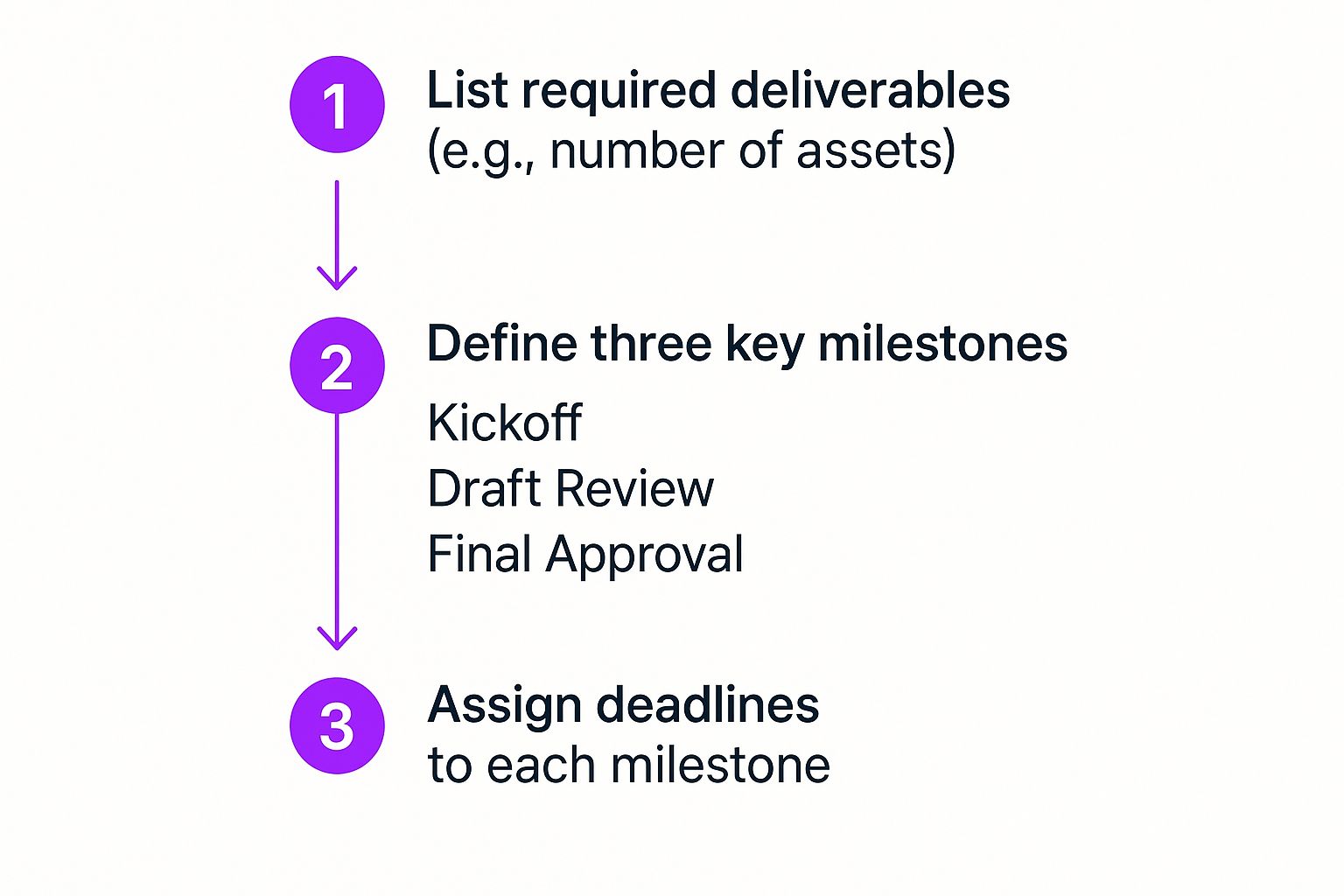
As you can see, the process moves from defining exactly what you need to setting clear checkpoints along the way. A simple table is a great way to visualize this in your brief.
Here’s a quick example of what that could look like for a hypothetical 4-week project.
Sample Project Timeline Milestones
| Week | Key Milestone | Responsible Team |
|---|---|---|
| 1 | Finalize copy and creative concepts | Marketing & Design |
| 2 | First draft of all assets delivered | Design & Video |
| 3 | Stakeholder feedback and revisions | All Teams |
| 4 | Final asset approval and delivery | Marketing & Project Lead |
By structuring your requirements this way, you get the creative team and stakeholders aligned on expectations from day one. It paves the way for a much smoother, more efficient project for everyone involved.
Common Mistakes to Avoid When Writing a Brief
Even the sharpest creative brief can go sideways if it falls into a few classic traps. Learning how to nail a brief is as much about what you leave out as what you put in. If you want to empower your creative team instead of confusing them, you have to know the pitfalls.
The single biggest mistake? Being too vague.
A brief asking for "something cool" or to "increase brand awareness" is a dead end. It gives your team absolutely nothing to build on. It’s like telling an architect to build you "a nice house" but forgetting to hand over the blueprints.
But the opposite is just as bad. Being too prescriptive chokes out all the oxygen in the room. When you dictate the exact photos, copy, and layout, you're not writing a brief; you're creating a paint-by-numbers kit. You hired creatives for their expertise—so let them use it.
The best briefs find that perfect sweet spot. They give just enough strategic direction to keep the project on target but leave enough open space for the team to come up with something truly brilliant.
Overcoming Internal Hurdles
Another landmine is packing your brief with company jargon and acronyms. Your creative partners, especially freelancers or agencies, aren't part of your internal world. They don't speak your language. This just creates confusion and slows everything down while they have to ask for translations. Always write for an outsider.
Finally, failing to get your stakeholders on board before the brief is finalized is a recipe for disaster. If your key decision-makers aren't aligned from the get-go, you're basically signing up for a painful process of endless revisions and conflicting feedback down the line.
Just look at the difference when you're briefing for something like product visuals:
- Bad: "We need some product shots for the new campaign."
- Good: "We need five lifestyle images for Instagram showing our product in a real-world setting, appealing to busy professionals who value convenience."
That level of clarity makes all the difference. And if you’re looking to push your visuals even further, our guide on AI product photography has some great ideas for crafting more specific and impactful requests.
By steering clear of these common mistakes, you can turn a simple document into a powerful tool that sets your project up for success from day one.
Still Have Questions About Creative Briefs?
Even with the best template in hand, a few practical questions always pop up when you're in the trenches. Let's tackle some of the most common ones I hear from teams just getting started.
So, How Long Should a Creative Brief Actually Be?
There’s no magic word count. The only rule is: as long as it needs to be and as short as possible.
Think about it this way—a brief for a quick social media ad might just be a single, tightly written page. But for a massive brand launch? You’re probably looking at a more detailed document. The key isn't length, but clarity. If every sentence serves a purpose and moves the project forward, you've nailed it.
Who’s Supposed to Write This Thing?
Usually, the project owner, an account manager, or a marketing manager is the one holding the pen. What’s most important is that whoever writes it truly gets the project's strategic goals and has the pull to get answers from all the key players.
While one person should "own" the brief to avoid chaos, it's a team sport.
The biggest mistake I see is someone writing a brief in a vacuum. You have to talk to the creative team, get insights from sales, and loop in anyone else who has a stake. That's how you create a brief that’s not just inspiring, but actually achievable.
Can I Just Reuse the Same Brief for Different Projects?
Please don't. While you should absolutely have a go-to template to keep things consistent, every single brief needs to be tailored to the project at hand.
The objectives, deliverables, and success metrics for a new website are completely different from those for a seasonal sale. Copy-pasting an old brief is a recipe for generic, uninspired work. Treat each one like the unique strategic plan it is.
Ready to bring your creative vision to life without the hassle of manual design? Bulk Image Generation uses advanced AI to create hundreds of unique, professional-quality images in seconds. Describe your goal, and let our platform handle the rest. Start creating stunning visuals today.