Choosing the Best Paper for Coloring Books

Ryan Bennett • December 4, 2025
Discover the best paper for coloring books. Our guide covers weight, texture, and finishes to stop bleed-through from markers, pencils, and pens.
Looking for the best paper for coloring books? I get this question all the time, and while the "perfect" paper really depends on your tools, there's a fantastic all-around sweet spot: a smooth, uncoated paper between 120-160 GSM. This weight gives you an excellent balance of durability and texture, making it versatile enough for both colored pencils and markers without that frustrating bleed-through.
Your Quick Guide to Perfect Coloring Paper
Choosing the right paper is probably the single most important decision you can make to level up your coloring experience. It's what transforms a simple hobby into a truly satisfying artistic practice. Forget flimsy printer paper that tears at the first sign of pressure and lets ink bleed everywhere; the foundation of a great coloring book is in its pages.
Understanding just a few key characteristics will give you the confidence to pick the perfect canvas for your creations. The three pillars of a fantastic coloring experience are paper weight, texture, and bleed resistance. Nail these three, and your colors will look more vibrant and your artwork will actually last.
Key Paper Qualities to Consider
- Weight (GSM): Think of this as the paper's thickness and sturdiness. A higher GSM (Grams per Square Meter) means a heavier, more durable page that can handle more pressure and different types of art supplies.
- Texture (or 'Tooth'): This is all about the surface feel. A little bit of "tooth" is great for grabbing pigment from colored pencils, allowing you to build up rich, beautiful layers. A smoother surface, on the other hand, is perfect for markers to glide across without feathering or catching.
- Bleed Resistance: This one is absolutely crucial, especially if you love using markers or ink pens. Thicker, higher-quality paper stops the ink from soaking through to the other side, protecting the pages underneath and keeping your book looking pristine.
The trends in the adult coloring book market back this up. Consumers are happiest with papers that fall between 80 GSM and 160 GSM because they hit that perfect balance—preventing bleed-through while letting colors look rich and saturated. If you're into industry trends, you can find more analyses on book paper choices on OpenPR.
If you're creating your own artwork, especially with AI tools, understanding these paper qualities is essential before you hit "print." For more on that, you can check out our detailed guide on producing amazing AI-generated coloring pages.
A great coloring book starts with its paper. The right choice not only makes your colors pop but also enhances the entire mindful process, turning a simple activity into a truly therapeutic escape.
To make things even easier, I've put together a quick reference table matching paper weights to the coloring tools they work best with. Think of it as your cheat sheet for picking the right paper every time.
Paper Weight and Best Use Guide for Coloring
| Paper Weight (GSM) | Best For | Bleed-Through Risk | Common Use Case |
|---|---|---|---|
| 75-90 GSM | Crayons, light sketching | High | Standard printer paper (not recommended) |
| 100-130 GSM | Colored pencils, gel pens | Low to Medium | Hobbyist coloring books, personal projects |
| 140-160 GSM | Alcohol markers, mixed media | Very Low | Professional-quality and print-on-demand books |
| 200+ GSM | Watercolors, heavy ink | None | Single-page art prints, premium books |
This table should give you a solid starting point. As you can see, that 140-160 GSM range really is the sweet spot for serious colorists who want to use a variety of mediums without worry.
Getting to Know Your Paper Like an Expert
To pick the absolute best paper for a coloring book, you need to start thinking less like a casual buyer and more like a paper connoisseur. All those technical terms you see on the packaging—GSM, tooth, brightness—aren't just fancy jargon. They're the language that describes exactly how your art will look and feel on the page.
Once you get a feel for them, you can predict with surprising accuracy how your colored pencils will layer or if your markers will bleed. It’s the secret to getting professional results.
It All Starts With Weight (GSM)
Let's begin with paper weight, which is usually measured in GSM (Grams per Square Meter). A simple way to think about it is like the thread count in bedsheets or the thickness of a good t-shirt. Your everyday office paper is pretty flimsy, sitting around 75-90 GSM.
For a high-quality coloring book, you need something with more backbone. We're talking 120 GSM or higher. This extra heft does two things: it makes the book far more durable against accidental tears, and it gives each page a premium, satisfying feel in your hands.
Decoding Texture and Finish
Next up is texture, which artists often call "tooth." Imagine trying to draw on a super-slick pane of glass—your pencil would just slide right off with nowhere for the color to go. Now, picture drawing with chalk on a sidewalk; the slightly rough surface grabs the chalk.
That's exactly how paper tooth works. A paper with a nice, subtle tooth has microscopic peaks and valleys that grip the pigment from colored pencils. This is what allows you to build up those rich, blendable layers of color.
For markers, however, a smoother surface is usually your best friend. An ultra-smooth paper lets the marker nib glide effortlessly, creating clean, uniform strokes. It also helps prevent the ink from "feathering," which is when it spreads out into a fuzzy, messy line.
The finish is just as important. For coloring, an uncoated (matte) finish is almost always the way to go. Its porous surface eagerly soaks up ink and pencil pigment. Glossy or coated papers are just too slick and notorious for causing smudges.
Stopping Bleed-Through and Making Colors Pop
Opacity, or bleed-through resistance, is a make-or-break feature. Think of it like a thick, dense wall that blocks sound from bleeding into the next room. A heavier, denser paper does the same thing for your ink.
It acts as a barrier, stopping aggressive mediums like alcohol markers from soaking straight through and ruining the beautiful artwork on the other side. This is why a higher GSM is almost always linked to better bleed resistance.
Your paper's brightness is what makes your colors sing. A brilliant white sheet acts like a clean, bright canvas, letting every single hue show its true intensity. It’s the difference between a good piece and a great one.
Finally, don't forget the paper’s whiteness or brightness. A brighter, whiter sheet makes colors appear more vivid and true to life. It gives you a high-contrast background that makes every part of your artwork pop right off the page.
To really become a pro, it's also helpful to look at how books are physically put together, including understanding book dimensions paperback, since these details shape the final experience. By mastering these core ideas, you’re no longer just buying paper—you’re intentionally selecting the perfect canvas for your art.
Matching Your Tools to the Right Paper
Choosing the right paper for your coloring book is a lot like a chef picking the perfect pan. Your art supplies—the ingredients—will behave completely differently depending on the surface you give them. The real magic happens when you find that perfect pairing, the one that takes your art from just "good" to absolutely stunning.
This isn't about some mythical, one-size-fits-all "best" paper. It's about understanding which paper lets your favorite tools shine. After all, what a dry colored pencil needs is the polar opposite of what a wet alcohol marker craves. Let’s get into exactly what you should be looking for based on what's in your art kit.
This decision tree gives you a quick visual on the core choices you'll face when matching your medium to a paper surface.
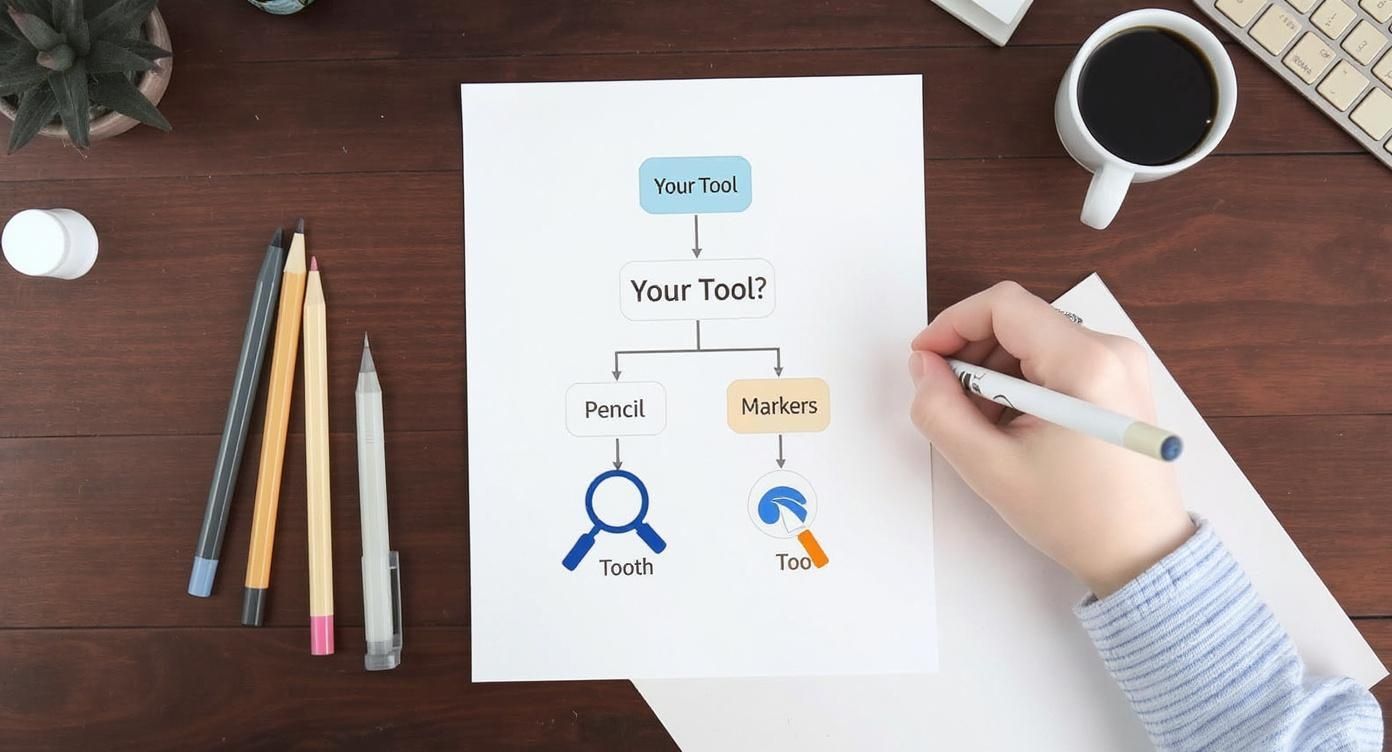
As you can see, it all boils down to a fundamental choice: tooth for dry media versus smoothness for wet media. That single decision will guide everything else.
Art Medium and Ideal Paper Pairing
Finding the perfect paper can feel like a quest, but this table breaks it all down. Think of it as your cheat sheet for matching your go-to coloring tools with the paper that will make them perform their best, avoiding common frustrations like bleeding, pilling, or dull colors.
| Coloring Medium | Ideal Paper Weight (GSM) | Recommended Texture | Key Consideration |
|---|---|---|---|
| Colored Pencils | 120-160 | Medium tooth or Vellum | Needs texture to "grab" pigment for layering and blending. |
| Alcohol Markers | 160-250 | Ultra-smooth, coated | Heavy and smooth prevents bleed-through and allows ink to blend. |
| Crayons | 80-120 | Slight tooth | A little texture helps the wax adhere without being too rough. |
| Gel Pens/Fineliners | 120-140 | Smooth | A smooth surface prevents the pen tip from skipping or clogging. |
| Watercolors/Washes | 200-300 | Cold Press (textured) | Must be heavyweight to prevent warping and buckling when wet. |
Ultimately, the goal is to eliminate the guesswork. Using the right paper not only improves your final artwork but makes the entire creative process more enjoyable and predictable.
The Best Paper for Colored Pencils
Colored pencils need something to grab onto. Imagine the pigment as a fine dust—it needs a surface with a little texture, or "tooth," to settle into and build up. If the paper is too smooth, you’ll find it nearly impossible to add multiple layers, which is the key to rich blending and shading.
You'll want to look for vellum or a medium-tooth drawing paper. These surfaces have just enough bite to grip the pencil's waxy or oil-based pigment. This is what lets you build up dozens of layers, creating those deep, vibrant colors that look painterly and professional. A paper weight of around 120 GSM is a fantastic place to start.
Ideal Paper for Alcohol Markers
When it comes to alcohol markers like Copics or Sharpies, you need to think in the complete opposite direction. These markers are loaded with a solvent that needs to glide across the surface to blend seamlessly. If you use a paper with tooth, it will shred your marker nibs and cause the ink to feather out into fuzzy, uncontrolled lines.
The best choice here is an ultra-smooth, thick paper, preferably one that's coated. Look for paper specifically labeled "marker paper," which is typically 160 GSM or higher. This heavy, dense paper is your best defense against ink bleeding through to the next page. The smooth finish lets you lay colors side-by-side and blend them without streaks, which is non-negotiable for achieving those flawless gradients alcohol markers are famous for.
Key Takeaway: Your paper choice isn’t just a preference; it's a technical requirement. The paper's surface dictates how well your medium can be applied, layered, and blended.
Paper for Gel Pens and Light Washes
Gel pens and fineliners also work best on a smoother surface. This helps prevent the fine pen tip from skipping, catching on the paper fibers, or clogging up. While they aren't as aggressive as alcohol markers, a thin, flimsy paper can still show indentations from pressure or even buckle slightly. A smooth paper around 140 GSM will give you a great, clean experience.
If you're someone who loves adding light watercolor or water-based marker washes to your pages, you absolutely must use a heavyweight paper. Anything less than 200 GSM—like a mixed-media or watercolor paper—will warp, pill, and buckle the second it gets wet. While this isn't practical for a whole coloring book, it's perfect for printing single-page art prints. Many artists love to generate unique designs with an AI image generator for creative projects and print them on this type of paper to really experiment with different mediums.
How to Print Your Own Coloring Books
There’s something magical about turning your digital art into a real, hold-in-your-hands coloring book. Whether you’re printing a few pages for your kids or putting together a book to sell, getting the printing right is where the magic happens. Let’s walk through everything from picking a printer to putting that final book together.
Your first big decision is the printer. You’re looking at two main contenders: inkjet and laser. Each has its own personality, and the right choice depends on the kind of coloring book you're making.
Inkjet printers are the artists of the two, known for their rich, beautiful colors. They're also more forgiving with different paper types, easily handling thicker, textured stocks. The only catch? The ink can sometimes smudge if it gets wet.
Laser printers are all about precision. They produce incredibly sharp, crisp black lines that are completely waterproof once they’re on the page. This makes them a fantastic choice for pure line art, especially if you plan on using watercolors or markers.
Setting Up Your Printer for Success
Once you've chosen your printer, you can't just hit "Print" and hope for the best. Coloring book paper is usually much thicker than your average copy paper, so you need to tell your printer what's coming. A quick dive into the settings menu is your key to avoiding jams and getting a flawless print.
- Paper Type: Dig around for options like “Cardstock,” “Heavy Paper,” or “Matte Photo Paper.” This signals the printer to slow down and handle the thicker sheet properly.
- Print Quality: Don’t skimp here. Always crank it up to “High Quality” or “Best.” You want your lines to be dark, solid, and inviting—the perfect canvas for color.
- Single-Sided Printing: This is a non-negotiable for coloring books. Always print on just one side of the paper to prevent any bleed-through, ink transfer, or impressions from messing up the next design.
If you’re working with a big batch of AI-generated images, getting them all to the right size and resolution before printing is a must. A good tool that lets you batch resize your images will save you a world of headache and ensure every page in your book looks consistent.
Choosing Your Binding Method
The final touch is binding your pages. This isn't just about holding the book together; it dramatically affects the coloring experience. A book that lays flat is always the winner. For a really deep dive, some guides show you how to print coloring pages for perfect results, going into even more detail.
Pro Tip: Always run a single test print before you commit to the whole stack. Check the line quality, make sure everything is aligned, and most importantly, test your favorite markers or pencils on it. You need to know how the paper will behave.
Here are a few of the most popular ways to bind your book:
- Spiral or Wire-O Binding: This is the undisputed champion for usability. A spiral-bound book can lie completely flat or even fold back on itself, giving you easy access to every last corner of the page.
- Perfect Binding: This is what gives your book that professional, "bookstore-shelf" look with a flat, squared-off spine. It looks amazing, but it's a bit stiff and won't lay perfectly flat, which can be frustrating for coloring.
- Saddle Stitch (Stapled): Simple, fast, and cheap. This method uses staples along the folded spine and works great for smaller books with fewer pages, usually under 64.
Why the Right Paper Elevates Mindful Coloring
Coloring is so much more than a hobby. For millions, it's a genuine form of therapy and a much-needed break from our screens. The paper you choose is right at the heart of this experience, turning a simple activity into a calming ritual. It’s not just about what the final picture looks like—it’s about making the entire process feel incredible from the moment your pencil touches the page.
Think about the subtle, satisfying scratch of a colored pencil on a nicely textured sheet. Or the smooth, silent glide of a marker across a page that won't bleed. These are the small sensory details that ground you in the present moment and help quiet a busy mind.
The Connection Between Touch and Calm
When the paper is flimsy, the experience is just… frustrating. Thin pages tear easily, markers bleed through and ruin the design on the back, and pencil colors just won't blend properly. These little annoyances create friction, pulling you right out of that relaxed state you were aiming for.
On the other hand, working with the best paper for coloring books gets rid of all those roadblocks. It lets your creativity flow without interruption. You can just relax and color, confident that the paper can handle whatever you throw at it.
The right paper does more than just hold ink—it holds your attention. Its quality is a direct line to the meditative state that makes adult coloring so good for stress relief. It turns every single stroke into an act of mindfulness.
The huge boom in adult coloring that kicked off around 2015 was built on this very idea. People quickly made it clear they wanted books printed on thick, uncoated paper that felt substantial and didn't let them down. Even today, with over 200 million units sold worldwide every year, that demand for quality is a massive driver in the market. Digging into consumer trends in adult coloring books shows just how much quality shapes what people buy.
Ultimately, spending a little more on better paper is an investment in your own well-being. It makes sure every coloring session is a truly restorative escape, free from technical headaches and full of creative joy. That link between a quality physical product and a positive mental outcome is what elevates coloring from a simple pastime to a powerful therapeutic practice.
Making Smart and Sustainable Paper Choices
Creating beautiful art doesn't have to be a battle between your budget and the planet. Honestly, you can have it all. By making a few intentional choices, you can find the perfect paper for your coloring book that aligns with your values and delivers fantastic quality. It all comes down to knowing what to look for and where to find it.
When you're thinking green, two labels are your best friends. Recycled paper is exactly what it sounds like—it gives old paper a second life instead of sending it to a landfill. Then there’s FSC-certified paper, which is your guarantee that the wood pulp came from responsibly managed forests. Grabbing paper with either of these certifications is a simple, powerful way to reduce your environmental footprint.
Finding Great Paper Without Breaking the Bank
Let's be real: premium art paper can get pricey. But you absolutely don't need to spend a fortune to get a great coloring experience. Many artists and creators have found a sweet spot by looking in the office supply aisle.
- Presentation Paper: Think of this as the sophisticated older sibling to standard copy paper. It's usually around 120 GSM, with a smooth, bright white surface that markers and pens just glide over.
- Heavyweight Cardstock: A pack of 65 lb (roughly 176 GSM) cardstock from your local craft or office store is an absolute workhorse. It's affordable, widely available, and handles markers, colored pencils, and even light ink washes beautifully.
The good news is that the market is catching on to this eco-conscious wave. Big publishers are increasingly using recycled papers and soy-based inks, and some indie brands are even offering wild options like plantable paper with seeds embedded right in the page. You can dive deeper into these trends and how they're shaping the adult coloring book market to see just how mainstream this has become.
Choosing sustainable or budget-friendly paper isn’t a compromise—it’s an empowered decision. It proves that a mindful approach to your art supplies can enhance your coloring experience while respecting both your budget and the environment.
At the end of the day, it's all about making informed choices. Whether you reach for a premium recycled sheet or a trusty, cost-effective cardstock, you can create stunning, responsible art.
Common Questions About Coloring Book Paper
Even after you've got a good handle on paper basics, a few questions always seem to surface. Let’s tackle those common head-scratchers so you can feel completely confident when you’re ready to choose.
Can I Just Use Regular Printer Paper for Coloring?
You can, but you probably won't enjoy it. That standard copy paper you have in your printer is usually around 75-90 GSM, which is simply too flimsy and absorbent for most art mediums.
Markers will bleed right through and stain whatever is underneath. Colored pencils won’t have anything to grip onto, making layering and blending nearly impossible. Even gel pens can be too much for it, sometimes causing the paper to pill or tear.
Moving up to at least 120 GSM paper is the single best thing you can do for your coloring experience. It’s a simple switch that lets your art supplies actually work the way they were designed to.
What Does "Acid-Free Paper" Actually Mean?
When you see “acid-free” on the label, it’s a promise of longevity. It means the paper has a neutral pH, which is a big deal for preventing it from yellowing, turning brittle, and basically falling apart over time.
This quality comes from removing lignin—a natural, acidic compound in wood pulp—during the manufacturing process. If you’re creating pages you want to keep, display, or sell, using acid-free paper is non-negotiable. It ensures your artwork stays as vibrant as the day you finished it for years to come.
What’s the Best Paper for Alcohol Markers?
Alcohol markers are a different beast entirely and need a special kind of paper. Their ink is incredibly saturated and will bleed through just about any uncoated paper, no matter how thick it is.
Your best bet is a super smooth, bleed-proof paper that’s 160 GSM or heavier. You'll often see this sold as dedicated "marker paper." This type of paper usually has a special coating that stops the ink from feathering (creeping outside your lines) and keeps it sitting on the surface. That surface-level ink is exactly what you need to achieve those beautiful, seamless blends alcohol markers are famous for.
At Bulk Image Generation, we give creators the tools to bring incredible, one-of-a-kind designs to life for any coloring book project. Ready to turn your concepts into print-ready pages? Check out our coloring page generator and get started today