8 Unforgettable Dance Posters Ideas to Inspire Your 2025 Campaign

Ryan Bennett • December 25, 2025
Discover 8 actionable dance posters ideas to elevate your marketing. Get themes, layouts, and AI-powered tips for recitals, classes, and events.
In the world of dance, the first performance happens long before the curtain rises: it happens on the poster. An effective dance poster does more than just announce dates and times; it captures the very soul of the movement, the energy of the rhythm, and the emotion of the choreography. It’s the silent invitation that promises an unforgettable experience, a crucial visual hook that can determine whether a seat is filled or left empty.
However, creating a design that stops passersby in their tracks can be a daunting task. How do you translate the kinetic energy of dance into a static image? How do you stand out in a visually saturated world? This guide is designed to answer those questions by providing a collection of powerful dance posters ideas that move beyond generic templates to offer actionable strategies for creating compelling visuals.
We are unveiling 8 distinct concepts, from minimalist geometric designs that communicate elegance to interactive AR-enabled posters that bring choreography to life. You'll find inspiration tailored for every style and event, whether you're promoting a ballet recital, a hip-hop battle, or a contemporary dance workshop. Designing a compelling dance poster is a crucial first step in attracting an audience. To ensure your designs translate into sold-out shows, it's essential to understand the bigger picture of how to advertise an event effectively. This guide will also explore how to use AI tools, like Bulk Image Generation, to produce dozens of unique, professional-quality variations in minutes, streamlining your creative workflow from initial concept to a full-scale campaign launch.
1. Minimalist Geometric Dance Poster
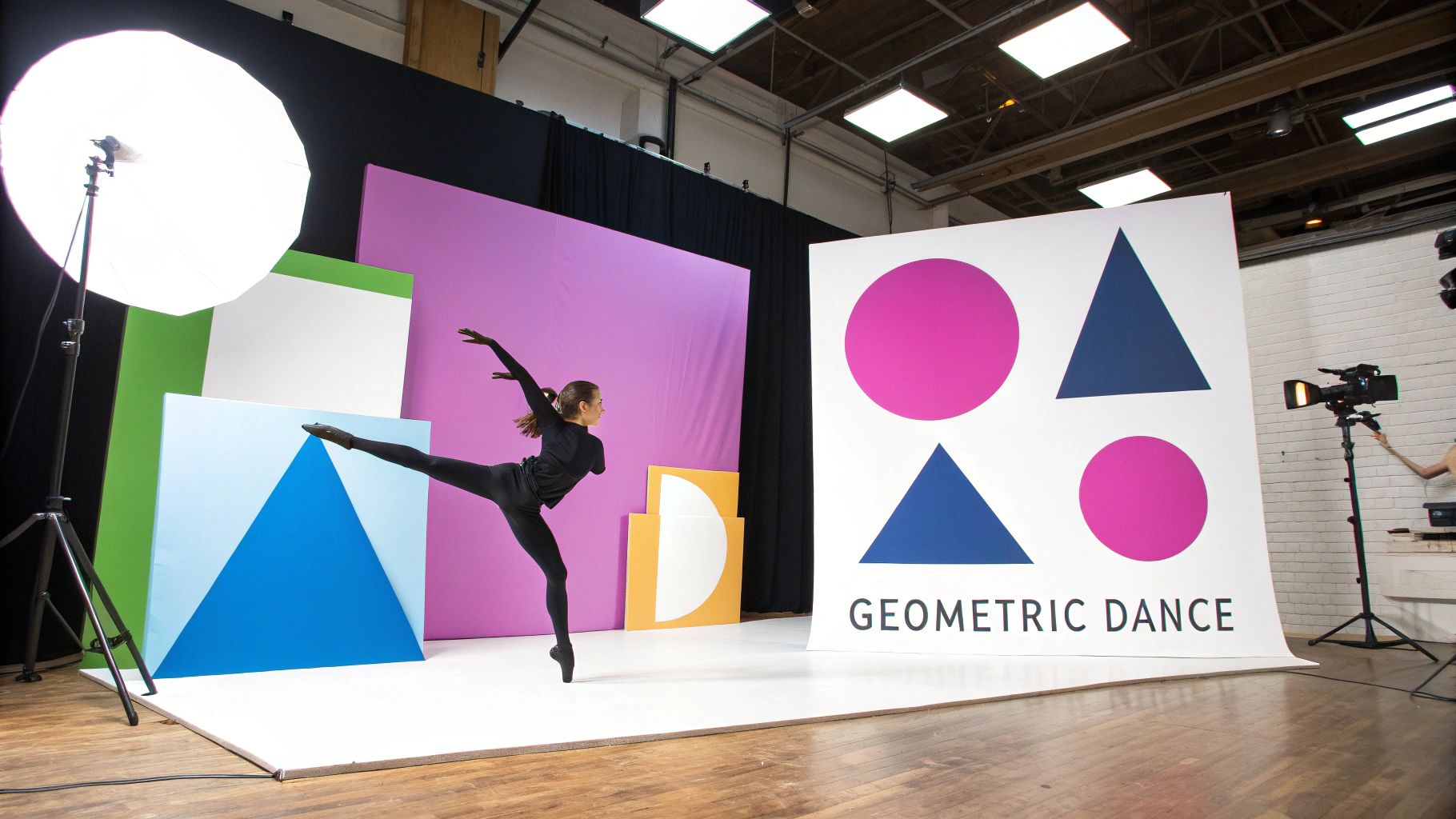
A minimalist geometric approach is one of the most sophisticated dance posters ideas, focusing on the interplay between simple shapes, clean lines, and intentional negative space. This design philosophy, rooted in the Swiss Style (International Typographic Style), strips away unnecessary ornamentation to communicate with clarity and elegance. The result is a visually striking poster that conveys professionalism and artistic confidence.
This style uses basic geometric forms like circles, squares, and triangles to create dynamic compositions that evoke movement and rhythm without literal imagery. A limited color palette, often just two or three contrasting hues, amplifies the design's impact. The focus shifts to typography and layout, where the arrangement of elements becomes as expressive as the dance itself. This makes it a perfect fit for contemporary dance companies, modern ballet showcases, and avant-garde performance art events.
Why This Idea Works
The power of minimalist geometric design lies in its versatility and modern appeal. It cuts through the visual noise of busy event promotions, capturing attention with its deliberate simplicity. By focusing on form and structure, it mirrors the discipline and precision inherent in many dance forms. This approach is highly effective for targeting audiences who appreciate contemporary aesthetics and fine art, making your event appear curated and high-caliber.
Key Insight: Geometric minimalism isn’t about being empty; it's about making every element count. The negative space is an active component of the design, guiding the viewer's eye and creating a sense of balance and flow.
How to Implement This Poster Idea
- Define Your Core Shapes: Start by selecting a few simple geometric shapes that reflect the energy of your event. Sharp angles might suit a tango or hip-hop class, while flowing circles could represent ballet or lyrical dance.
- Establish a Limited Color Palette: Choose two to three high-contrast colors. Classic combinations like black, white, and a single bold accent color (such as red or yellow) are timeless. Alternatively, explore muted, sophisticated palettes for a more understated feel.
- Prioritize Typography: Use a clean, sans-serif typeface like Helvetica, Futura, or Gill Sans. Treat the text as a design element itself, aligning it with the geometric grid and using variations in size and weight to create a clear information hierarchy.
- Leverage AI for Variations: Use a bulk image generator to create multiple compositions quickly. Prompt with phrases like, "minimalist dance poster, overlapping circles and sharp lines, swiss style, deep blue and gold color palette." Generate 20-30 options and select the strongest designs for refinement.
- Integrate Details Seamlessly: Place essential information like the date, time, and venue within the negative space to maintain a clean layout. This makes the text feel integrated rather than just placed on top of the design.
2. Dynamic Motion Blur & Action-Based Poster
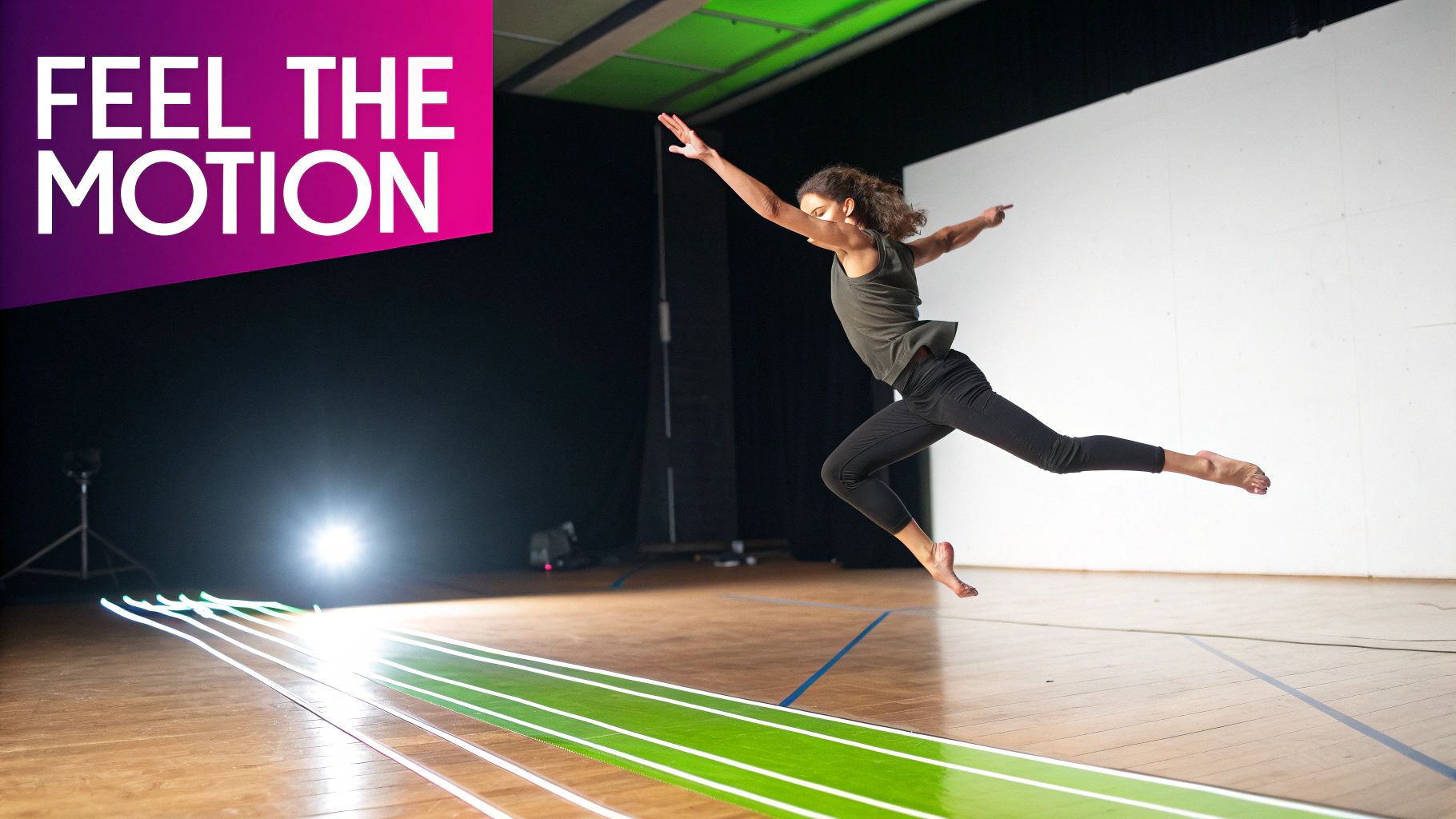
A dynamic motion blur poster is an electrifying dance posters idea designed to capture the raw energy and speed of movement. This approach uses techniques like motion blur, directional lines, and high-impact action poses to convey intensity and athleticism. Unlike static portraits, these posters freeze a moment of peak action, making the viewer feel the power and velocity inherent in the performance.
This style is a perfect match for high-energy genres such as hip-hop, street jazz, contemporary, and competitive dance. It visually communicates the excitement of a dance battle, the precision of a powerful leap, or the intensity of an urban dance showcase. The focus is on creating a sense of immediacy and dynamism that grabs attention and promises an unforgettable event.
Why This Idea Works
The strength of an action-based poster lies in its ability to communicate emotion and energy instantly. It appeals directly to an audience seeking thrilling, fast-paced entertainment. The visual language of motion blur and dynamic poses is universally understood as exciting and modern, making it highly effective for promotions on social media platforms where attention spans are short. This style tells a story of passion and skill, promising a show that is both technically impressive and emotionally charged.
Key Insight: Motion blur isn't just a visual effect; it's a narrative tool. It directs the viewer's eye along the path of movement, creating a powerful visual flow that mirrors the choreography itself and makes the static image feel alive.
How to Implement This Poster Idea
- Capture Peak Action: Focus on capturing dancers in mid-air, during a sharp turn, or executing a powerful move. These moments contain the most visual energy and create the most compelling compositions.
- Emphasize with Blur and Light: Use post-processing tools to add a subtle motion blur to limbs or the background, enhancing the sense of speed. Light streaks or neon lines can further guide the eye and accentuate the direction of movement.
- Use Bold, Energetic Typography: Choose fonts that are bold and impactful. Sans-serif typefaces with a slight slant or textured finish can complement the high-energy visuals without overpowering them.
- Generate Diverse Poses with AI: Use an AI image generator to create dozens of action-packed poses quickly. Prompts like, "dynamic hip-hop dancer mid-leap, motion blur effect, dramatic studio lighting, neon green accents" can yield powerful results. For more inspiration, you can explore some of the best prompt ideas for AI image generators to refine your concepts.
- Layer for Composite Effects: Combine multiple generated images to create a composite that shows a sequence of movements. This technique can build a richer visual narrative and showcase the complexity of the choreography.
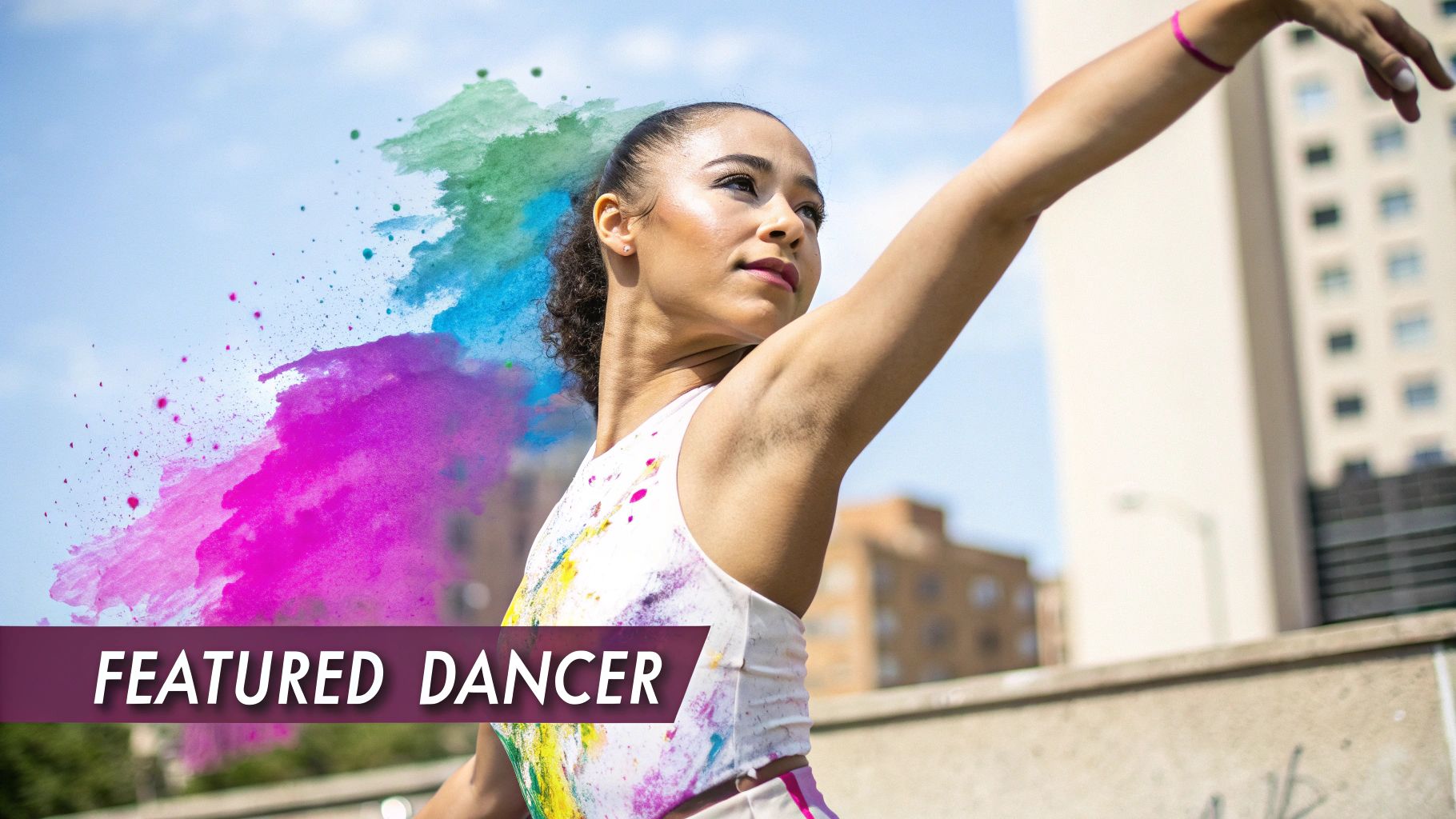
3. Photographic Dancer Portrait with Artistic Overlay
A photographic dancer portrait with an artistic overlay is one of the most compelling dance posters ideas because it grounds the design in human emotion while elevating it with creative flair. This approach pairs a high-quality, expressive photograph of a dancer with digital embellishments like watercolor washes, paint splatters, or abstract light effects. The result is a poster that feels both authentic and artistically ambitious, connecting the audience directly to the performer's skill and passion.
This style is perfect for showcasing the talent of featured performers, making it a go-to for professional companies like the Royal Ballet and the American Ballet Theatre. The photograph captures the raw power and grace of the dance, while the overlay adds a layer of thematic depth, suggesting the mood or story of the performance. It bridges the gap between commercial appeal and artistic credibility, making it ideal for recital announcements, seasonal showcases, and graduation performances.
Why This Idea Works
The strength of this idea lies in its fusion of realism and artistry. The photograph creates an immediate human connection, allowing viewers to see the dedication and emotion in the dancer's pose and expression. The artistic overlay then transforms a simple portrait into a piece of promotional art, making the event feel special and visually exciting. This method is incredibly versatile; a soft watercolor effect can evoke the romance of a ballet, while energetic paint splatters can capture the dynamic energy of a hip-hop battle.
Key Insight: This technique allows you to feature your actual performers, building recognition and excitement within your community, while still producing a highly polished and professional-looking poster.
How to Implement This Poster Idea
- Start with a Strong Photograph: Use a high-resolution photo of a dancer in a dynamic or emotionally resonant pose. Ensure the lighting is dramatic and the focus is sharp.
- Choose a Thematic Overlay: Select an artistic effect that matches the performance's tone. Watercolor for grace, grunge textures for urban dance, or light streaks for futuristic themes.
- Balance the Composition: Ensure the overlay enhances, rather than obscures, the dancer. Use blending modes like "Screen" or "Overlay" in your design software to integrate the elements naturally. The dancer should remain the focal point.
- Generate Diverse Poses with AI: Use an AI art generator to create multiple dancer portraits in various artistic poses. This is a fast way to explore different compositions. You can then use face-swapping tools to feature specific performers.
- Create a Cohesive Series: Apply a consistent overlay style across posters for different dancers in your company. This creates a powerful, unified campaign for your season or event.
4. Typographic Movement Poster
A typographic movement poster is one of the most intellectually engaging dance posters ideas, where the text itself becomes the star of the show. This approach uses letters, words, and phrases as visual elements, arranging them dynamically to create the illusion of movement, rhythm, and energy. Instead of relying on a photograph, the design communicates the essence of dance through creative letter placement, sizing, color, and spacing, turning typography into choreography.
This sophisticated style is highly effective for events where the theme, title, or featured artists are the main draw, such as dance festivals, workshops, or competitions. By manipulating type, you can evoke the fluidity of ballet, the sharp staccato of tap, or the explosive energy of hip-hop. The words literally dance across the page, capturing the audience's imagination before they even see a single step.
Why This Idea Works
The power of a typographic movement poster lies in its ability to be both artistic and direct. It communicates essential information while simultaneously serving as a compelling piece of graphic art. This approach is incredibly versatile, fitting any dance style, from classical to experimental. It positions an event as modern, thought-provoking, and design-conscious, appealing to an audience that values creativity and artistic innovation. For posters that leverage text as a primary visual element, explore how engaging quotation wall decals can inspire impactful typographic designs.
Key Insight: In a typographic poster, the font choice is the casting call. Each typeface has a distinct personality and movement quality. The right font can perform the dance on its own.
How to Implement This Poster Idea
- Choose Expressive Fonts: Select fonts that embody the spirit of the dance style. A flowing script might suit lyrical dance, while a bold, condensed sans-serif could represent urban or street styles.
- Create Typographic Hierarchy: Make the event title the main visual element. Experiment with scale, weight, and orientation to make it stand out. Use smaller text for details like date, venue, and performers, integrating them into the overall composition.
- Arrange Words to Show Motion: Don't just type in straight lines. Curve text along an arc, stagger letters up and down, or rotate words to create a sense of direction and flow. Think of the page as a stage for your words.
- Utilize AI for Complex Compositions: Generate dozens of variations quickly using AI tools. Use prompts like, "typographic poster for a contemporary dance festival, text 'RHYTHM' explodes from the center, kinetic typography, black and neon green."
- Layer with Subtle Textures: Enhance the design by placing the dynamic typography over a subtle background texture, like brushed metal, concrete, or paper grain. This adds depth without distracting from the text.
5. Vibrant Abstract & Colorfield Poster
A vibrant abstract or colorfield approach is one of the most emotionally resonant dance posters ideas, using large swaths of saturated color and non-representational forms to evoke mood and energy. This style, inspired by art movements like Abstract Expressionism and Color Field painting, prioritizes the psychological impact of color over literal imagery. It communicates the pure feeling of a dance performance-be it joy, passion, or tension-through a powerful visual language.
This design philosophy moves away from depicting dancers and focuses instead on the essence of the movement itself. Flowing gradients, sharp splashes of color, and layered textures create a dynamic composition that feels alive and rhythmic. The poster becomes a canvas for emotion, making it an excellent choice for contemporary dance, experimental performances, and events where the mood is as important as the choreography. It’s particularly effective for avant-garde showcases and electronic dance music events that fuse visual art with performance.
Why This Idea Works
The strength of an abstract colorfield poster lies in its ability to create an immediate and powerful emotional connection with the viewer. It bypasses intellectual analysis and appeals directly to the senses, much like dance itself. This makes the event feel modern, artistic, and deeply expressive. By avoiding specific imagery of dancers or venues, the design sparks curiosity and invites interpretation, encouraging potential attendees to imagine the unique experience awaiting them.
Key Insight: Abstract design isn't about chaos; it's about controlled expression. The choice of color, texture, and composition is highly intentional, designed to mirror the specific emotional tone and dynamic flow of the dance performance.
How to Implement This Poster Idea
- Select a Core Emotional Palette: Define the primary mood of your event (e.g., energetic, serene, dramatic) and choose colors that align with it. Warm reds and oranges can convey passion, while cool blues and greens can suggest fluidity and calm.
- Generate Abstract Backgrounds: Use an AI bulk image generator to create a wide array of visual concepts. Prompt with phrases like, "vibrant colorfield painting, energetic splashes of magenta and cyan," or "ethereal abstract gradient, flowing soft pastel colors, liquid motion."
- Layer for Depth and Complexity: Don't settle for a single image. Combine multiple abstract generations, adjusting their opacity and blending modes (like 'Screen' or 'Overlay') in a design tool to create a unique, textured composition with a sense of depth.
- Ensure Typographic Clarity: With a visually rich background, typography must be clean and bold to remain readable. Use a strong sans-serif font in high-contrast black or white. Position the text strategically in areas of lower visual complexity.
- Create a Cohesive Series: For multiple events or a festival, use analogous color schemes (colors next to each other on the color wheel) across different posters. This creates a visually unified yet distinct set of promotional materials.
6. Retro & Vintage Dance Poster
A retro or vintage approach is one of the most evocative dance posters ideas, tapping into the power of nostalgia to create an immediate emotional connection. These designs draw inspiration from specific historical eras, such as the glamorous Art Deco of the 1920s, the psychedelic concert posters of the 1960s, or the vibrant disco aesthetic of the 1970s. The goal is to evoke a specific feeling or time period, making the event feel both timeless and unique.
This style uses period-specific typography, color palettes, and graphic elements to transport the viewer. For instance, an Art Deco poster might feature bold geometric shapes, elegant sans-serif fonts, and metallic accents, while a 70s disco poster would lean into groovy scripts, warm earth tones, and dynamic, energetic imagery. This makes it an excellent choice for events celebrating classic dance forms like swing or jazz, themed parties, or for productions of historical ballets like those from the Ballets Russes era.
Why This Idea Works
The strength of a vintage design lies in its ability to tell a story before the viewer even reads the details. It sets a clear tone and expectation for the event, attracting an audience that appreciates a particular aesthetic or era. This approach stands out from modern, minimalist designs by offering warmth, character, and a sense of history. It can make a recurring event feel fresh or position a new showcase as a tribute to a classic art form.
Key Insight: A successful retro design is more than just using old-looking fonts. It’s about capturing the authentic spirit and design principles of an era, from its color theory to its compositional rules, to create a believable and immersive experience.
How to Implement This Poster Idea
- Select a Specific Era: Choose a decade or art movement that aligns with your event’s theme. Research posters from that period to understand their key visual characteristics. A 1950s rock-and-roll dance needs a different look than a 1920s jazz night.
- Use Era-Appropriate Typography: The font is crucial. Use ornate, geometric fonts for Art Deco; bubbly, rounded scripts for the 70s; or bold, industrial typefaces for a mid-century modern feel.
- Adopt a Vintage Color Palette: Each era has a distinct color signature. The 60s favored psychedelic oranges, purples, and yellows, while the 40s used more muted, patriotic colors. Use tools like Adobe Color to find historical palettes.
- Generate AI Variations: Prompt a bulk image generator with specific historical cues. Use prompts like, "1920s Art Deco dance poster for a ballet, gold and black, geometric patterns," or "1970s psychedelic rock concert poster for a modern dance festival, groovy typography, vibrant colors."
- Add Authentic Textures: Use a batch editor to apply subtle textures like paper grain, halftone dots, or faded overlays to your designs. This small step adds a layer of authenticity that makes the poster feel like a genuine artifact from that time.
7. Cultural & Ethnic Dance Poster
A cultural and ethnic dance poster is a powerful tool for celebrating and promoting specific dance traditions from around the world. This approach goes beyond generic imagery to incorporate culturally authentic visual elements, traditional patterns, and artistic styles native to each dance form. It is designed to honor cultural heritage while attracting audiences specifically interested in these rich traditions, such as ballroom, Latin, African, Asian, or Irish dance.
These dance posters ideas are essential for events that are deeply rooted in cultural identity, like an Afrobeat dance festival, a Latin ballroom competition, an Indian classical dance recital, or an Irish step-dancing championship. The design becomes a visual ambassador for the culture, communicating respect, authenticity, and the unique energy of the performance. By using specific cultural motifs and color palettes, the poster immediately connects with its intended community and educates broader audiences.
Why This Idea Works
This poster style succeeds by building a direct and meaningful connection with a specific community. It shows a deep respect for the art form's origins, which can foster trust and enthusiasm among performers and audiences alike. For those unfamiliar with the tradition, the poster serves as an intriguing and educational invitation, showcasing the beauty and distinctiveness of the culture. This authenticity makes the event feel more significant and specialized than a generic dance night.
Key Insight: Authenticity is non-negotiable. An effective cultural dance poster is a collaboration with the culture itself, ensuring that every design element is used respectfully and accurately to celebrate, not caricature, the tradition.
How to Implement This Poster Idea
- Research and Consult: Before designing, thoroughly research the specific visual language of the culture. When possible, work with cultural consultants or community leaders to ensure your design is accurate and respectful.
- Use Authentic Motifs: Incorporate traditional patterns, symbols, and color palettes that are significant to the dance’s origin. For a Bharatanatyam recital, this might include temple-inspired motifs and rich jewel tones.
- Leverage AI with Specificity: When generating images, use precise prompts. Instead of "African dance," try "Dynamic poster for a Sabar dance workshop, featuring Senegalese textile patterns, vibrant yellow and indigo colors, high-energy movement." Mention specific artists, regions, or styles for more authentic results.
- Prioritize Cultural Context: Prominently feature the names of guest artists, cultural ambassadors, or the specific dance style. If targeting immigrant communities, consider creating bilingual versions of the poster to improve accessibility and inclusivity.
- Draw Historical Inspiration: Look at historical posters or art from the culture of origin. This can provide a wealth of inspiration for typography, layout, and overall aesthetic that feels genuine and timeless.
8. Interactive & Augmented Reality (AR) Enabled Poster
Bridging the gap between physical and digital worlds, an interactive poster with Augmented Reality (AR) capabilities transforms a static print into an engaging multimedia experience. This forward-thinking approach embeds triggers like QR codes or image markers into the design, allowing audiences to unlock exclusive digital content with their smartphones. This elevates the poster from a simple announcement to a dynamic portal for your event.
This technology can launch video previews of the choreography, behind-the-scenes interviews with dancers, direct links to ticket purchasing pages, or even immersive AR filters that superimpose digital elements onto the user's environment. The poster becomes the first step in an interactive journey, capturing immediate interest and driving deeper engagement. This makes it an ideal choice for tech-forward dance festivals, contemporary performance art, and marketing campaigns aiming to create viral buzz among a digitally native audience.
Why This Idea Works
Interactive and AR-enabled posters turn passive viewing into active participation. They create a memorable "wow" factor that encourages social sharing and extends the reach of your marketing campaign far beyond the physical poster. By offering exclusive content, you provide tangible value to the viewer, strengthening their connection to the event and increasing the likelihood of ticket conversion. This method also provides valuable data, as you can track scan metrics to gauge which poster locations and designs are most effective.
Key Insight: The poster is no longer just an advertisement; it's the start of a conversation. By giving your audience something to do, you create a much more powerful and lasting impression than a traditional print could achieve alone.
How to Implement This Poster Idea
- Choose Your Interactive Element: A QR code is the simplest and most universally recognized trigger. Design it with high contrast and integrate it thoughtfully into the poster's visual hierarchy.
- Create Compelling Digital Content: The experience behind the scan must be rewarding. Link to a mobile-optimized landing page with a high-energy performance trailer, a special ticket discount, or an easy-to-use AR filter for Instagram or Snapchat.
- Provide Clear Instructions: Don't assume everyone is tech-savvy. Include a simple call-to-action like "Scan to See the Dancers in Action!" or "Unlock a Special Offer" to guide users.
- Use AI for A/B Testing: Generate several poster variations with different QR codes linked to unique tracking URLs. A prompt like, "dance event poster with a large, central QR code, art deco style, text says 'Scan for a Sneak Peek'" can help you create options quickly. Use the scan data to see which designs perform best.
- Track and Analyze: Use a URL shortener or QR code generator with built-in analytics to monitor how many people are scanning your posters and from where. This data is crucial for optimizing future campaigns.
8 Dance Poster Styles Comparison
| Style | Implementation complexity | Resource requirements | Expected outcomes | Ideal use cases | Key advantages |
|---|---|---|---|---|---|
| Minimalist Geometric Dance Poster | Low — simple shapes & type | Low — vector assets, basic AI prompts | Clean, scalable, professional visuals | Contemporary dance, social media, upscale venues | Fast production, highly scalable, versatile |
| Dynamic Motion Blur & Action-Based Poster | Medium — motion effects & composition | Moderate — action images, blur tools, lighting | High-energy, attention-grabbing imagery | Hip‑hop, competitions, street dance, social feeds | Conveys energy, highly shareable, strong visual impact |
| Photographic Dancer Portrait with Artistic Overlay | High — compositing & retouching | High — pro photography/AI realism, overlays, editing | Emotional connection; showcases performer credibility | Ballet, professional performances, recitals, premium venues | Strong emotional appeal, highlights talent, artistic depth |
| Typographic Movement Poster | Medium — advanced typographic design | Low–Medium — fonts, layout tools, typographic prompts | Information-dense, rhythmic visual hierarchy | Festivals, workshops, conferences, professional events | Highly legible, customizable, cost-effective |
| Vibrant Abstract & Colorfield Poster | Low–Medium — color composition skills | Low — AI generation, color testing tools | Bold mood-setting, standout visuals | Contemporary/experimental dance, festival branding | High visual impact, rapid color experimentation |
| Retro & Vintage Dance Poster | Medium — era-accurate styling & type | Moderate — period assets, textures, fonts | Nostalgic, timeless aesthetic | Classical ballet, jazz, tribute and heritage events | Evokes heritage, appeals to design-conscious audiences |
| Cultural & Ethnic Dance Poster | High — cultural research and sensitivity | High — cultural consultation, authentic assets, translations | Authentic representation and community resonance | Cultural performances, community events, diaspora festivals | Cultural authenticity, differentiates messaging, community appeal |
| Interactive & Augmented Reality (AR) Enabled Poster | High — AR/QR integration and testing | High — development, hosting, tracking, mobile optimization | Measurable engagement; deeper audience interaction | Tech-forward festivals, digital-first campaigns, premium events | Bridges physical–digital, trackable metrics, immersive experiences |
Now, It’s Your Turn to Take the Stage
The curtain is about to rise on your event, but the performance truly begins with your poster. We have journeyed through a dynamic spectrum of dance posters ideas, from the clean, sophisticated lines of Minimalist Geometric designs to the immersive, futuristic appeal of Augmented Reality experiences. Each concept is more than a mere template; it is a strategic tool designed to capture a specific mood, attract a particular audience, and tell a compelling visual story.
You’ve seen how a Dynamic Motion Blur poster can convey explosive energy, while a Photographic Portrait with Artistic Overlay can offer a moment of intimate, poignant connection with the dancer. We explored how typography itself can dance across the page in a Typographic Movement design and how a Vibrant Abstract poster uses color as its primary language to evoke pure emotion. These are not just aesthetic choices; they are communication strategies that build anticipation long before the first step is taken on stage.
From Inspiration to Implementation: Your Action Plan
The value of these ideas lies in their application. A great concept remains just that until it is brought to life. Your next steps are to move from the drawing board to the final print-ready design. Here is a practical roadmap to help you bridge that gap:
- Define Your Core Message: Before selecting a style, pinpoint the single most important feeling or piece of information you want your poster to convey. Is it elegance? Raw energy? Community spirit? A specific cultural celebration? This core message will be your North Star.
- Match the Style to the Event: Align your chosen aesthetic with the nature of your event. A vintage-inspired design is perfect for a swing dance night, while an AR-enabled poster could create incredible buzz for a contemporary digital arts and dance festival.
- Gather Your Assets: Collect high-quality photographs, define your color palette, and write your essential copy (event name, date, time, location, ticket information). Having these elements ready will streamline the entire design process.
- Iterate and Test: Don't commit to the first design you create. Generate several variations based on one or two of the strongest dance posters ideas from this list. Show them to a small group representing your target audience and gather feedback. Which one stops them in their tracks? Which one is most clear and exciting?
The Power of a Purpose-Driven Poster
Mastering the art of poster design is about more than just filling seats. It is about building a brand, creating a community, and setting expectations. A well-designed poster validates the quality and professionalism of your event. It shows that you care about every detail, from the choreography on stage to the visuals that represent it in the world. It’s an invitation that makes people feel they are about to witness something special.
Whether you are promoting a local dance class, a major recital, a club night, or a professional audition, your poster is your silent ambassador. It works for you 24/7, catching eyes on a crowded bulletin board, stopping the scroll on social media, and creating a memorable first impression. By embracing a thoughtful design strategy, you transform a simple piece of marketing into a powerful piece of art that reflects the creativity and passion inherent in dance itself. The stage is set, the spotlight is waiting, and now you have the creative tools to craft a poster that commands a standing ovation.
Ready to bring these powerful dance posters ideas to life with unprecedented speed and creativity? Stop wrestling with complex software and start generating stunning visuals in seconds. With Bulk Image Generation, you can describe any of the concepts from this article, and our AI will produce hundreds of unique, high-resolution options for you to test and perfect. Bulk Image Generation is the ultimate creative partner for producing your entire promotional campaign at scale.