Generating Backgrounds and Scene Sets for Faith-Based Video Content

Ryan Bennett • September 21, 2026
Prayer channels, devotional posts and scripture story videos need dozens of calm, respectful background images. Here is how creators batch them without the usual pitfalls.
Generating Backgrounds and Scene Sets for Faith-Based Video Content
Faith content is one of the steadiest, least-discussed use cases in bulk image generation. Daily prayer channels, scripture reading videos, devotional social posts, festival greetings — all of them need a constant supply of calm, respectful, text-free backgrounds, and they need them in sets, not one at a time.
The requests come from many traditions and several languages, and they share a shape: "below are 30 background prompts, all 16:9, no text, no captions, no logos".
Who's actually doing this, and why
- Daily devotional channels. One prayer per day means one background per day. Producing a month in a single batch is the only way that schedule survives.
- Scripture and mythology storytellers. Narrated story videos — a parable, an epic episode — needing a scene per beat, with the visual world held consistent across the whole telling.
- Community and church social accounts. Festival and holiday graphics: Easter, Diwali, Christmas, Ramadan — usually square or vertical, usually with a space left clear for text that gets added afterwards.
- Meditation and calm-content creators. Adjacent but the same production need: dozens of serene landscape backgrounds behind soft narration.
Pattern 1: the background set
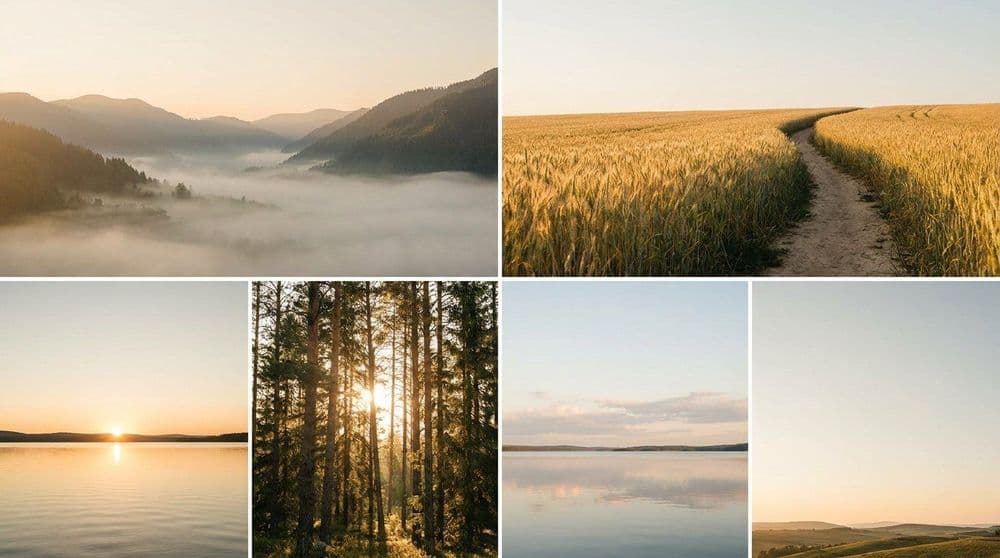
The most common request is not a religious figure at all — it's atmosphere. Light, landscape, stillness, a place for words to sit:
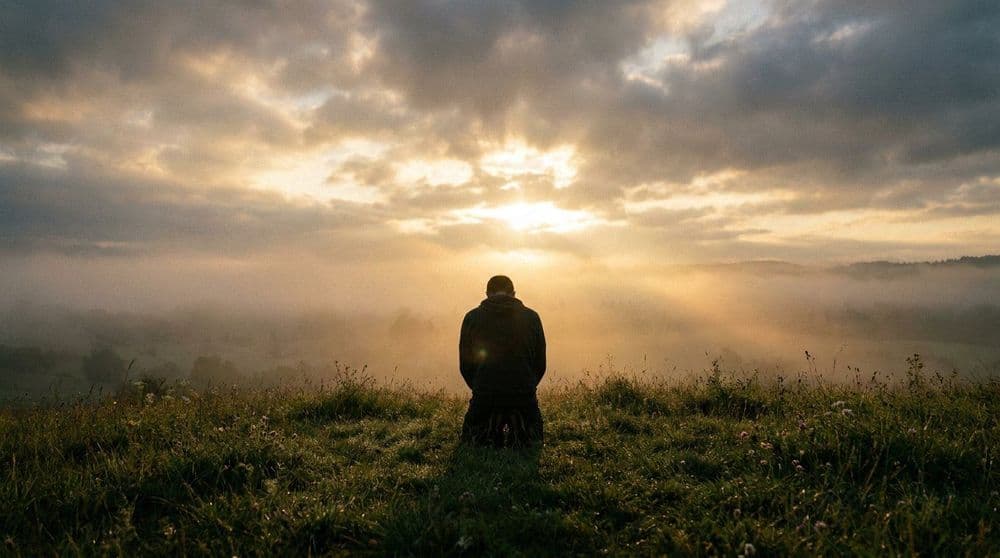
A person kneeling in prayer on a hilltop at sunrise, seen from behind at a distance, golden light breaking through clouds, soft mist, peaceful morning atmosphere, cinematic volumetric lighting, photorealistic, 16:9, no text, no captions, no watermark.
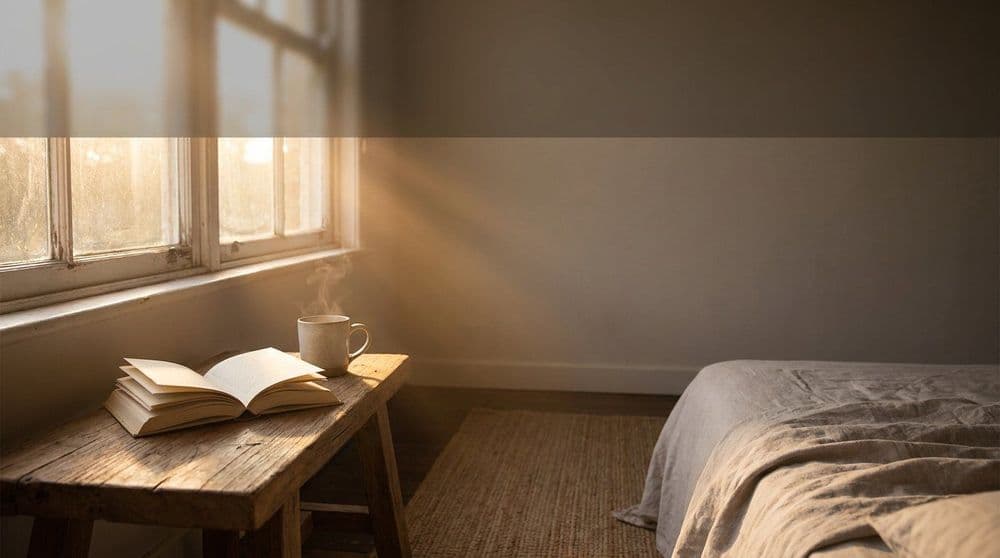
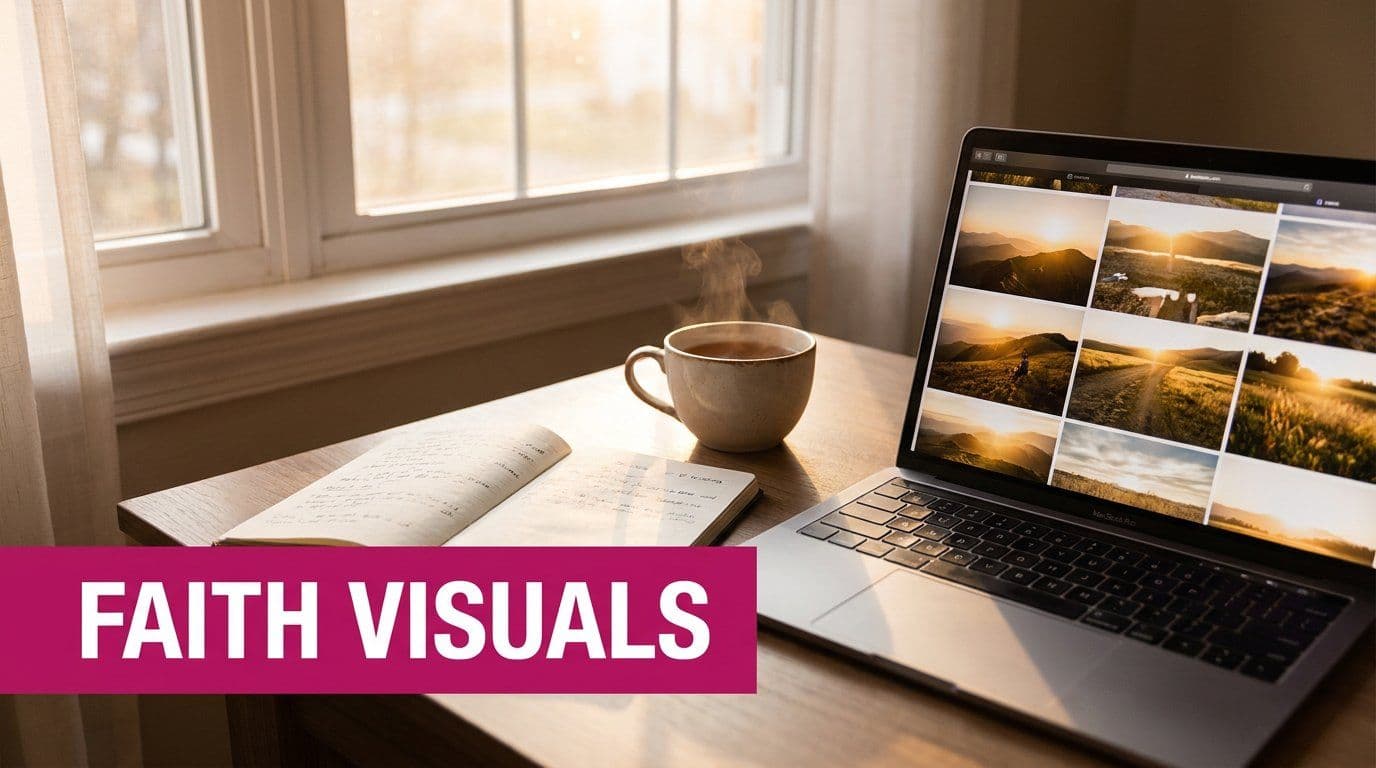
Warm morning light pouring through a bedroom window at dawn, an open book resting on a rustic wooden table beside a steaming cup, calm interior, soft golden glow, photorealistic, 16:9.
Thirty rows of this, one batch, a month of daily posts done.
Pattern 2: the scripture story set
Narrative sets work exactly like any other storyboard — a style lock, a character or environment lock, one line per beat:
Style for all frames: cinematic illustrated realism, dramatic lighting, deep gold colour grading, 16:9. Keep the landscape, costumes and time of day consistent across the whole sequence.
The creators doing this well treat consistency as the whole job: the same terrain, the same garments, the same light from frame one to frame sixty.
Pattern 3: coloring and activity pages
A quieter but recurring variant: black-and-white line art of scripture scenes for children's coloring books — the same "clean bold outlines, no shading, no grey" recipe as any other coloring batch, just with a different subject list.
A practical note on depicting sacred figures
This is the one place where a bit of thought saves you a lot of rework. Traditions differ sharply on depicting prophets, deities and sacred persons — some expect it, some forbid it outright, and audiences notice when it's handled carelessly. Two things that consistently work better than hoping for the best:
- Lead with light, landscape, hands, architecture and symbols rather than faces. A sunrise, an open book, a lit candle, a silhouette at a distance — these carry devotional weight, never misrepresent anyone, and leave room for text.
- When a figure genuinely belongs in the frame, describe posture and setting rather than facial detail, and keep the treatment reverent and consistent. Models render faces inconsistently anyway, which is its own argument for not putting a sacred face in thirty frames.
Know your audience's expectations before you generate sixty images, not after.
Which model to use
Atmospheric photoreal backgrounds — light, landscape, interiors — are where Nano Banana and Seedream are strongest, and that's the bulk of this work. For illustrated or storybook treatments, Flux keeps a style locked across a long set. If a graphic needs scripture text, a festival title, or a verse rendered inside the image, use Ideogram or ChatGPT Image 2 — everything else, including Midjourney and Stable Diffusion, will give you convincing-looking gibberish where the words should be. Most experienced creators here sidestep the issue entirely: generate clean, text-free backgrounds and add the words in Canva or their video editor, where they can be corrected and translated.
Tips from real batches
- Always ask for text-free output. "No text, no captions, no subtitles, no logos, no watermark" — the overlay comes later, in the editor.
- Leave negative space deliberately. "Calm sky occupying the upper third" gives the verse or title somewhere to sit without covering the image.
- Fix the aspect ratio per platform, per batch. 16:9 for YouTube, 9:16 for Shorts and status posts, 1:1 for feed graphics. Don't mix them in one run.
- Batch a month at a time. Daily channels live or die on having a queue; thirty backgrounds in one sitting is the entire point.
- Lock the palette for a series. "Warm golden tones" or "deep gold grading" repeated across every row is what makes a channel's output look like a channel rather than a folder of stock images.
- Keep a reusable "evergreen" set. Sunrises, open books, candles, quiet interiors — these get re-used across many posts, so a well-made batch keeps paying out for months.