Character Lock — Keeping One Character Consistent Across 30+ AI Images

Ryan Bennett • September 21, 2026
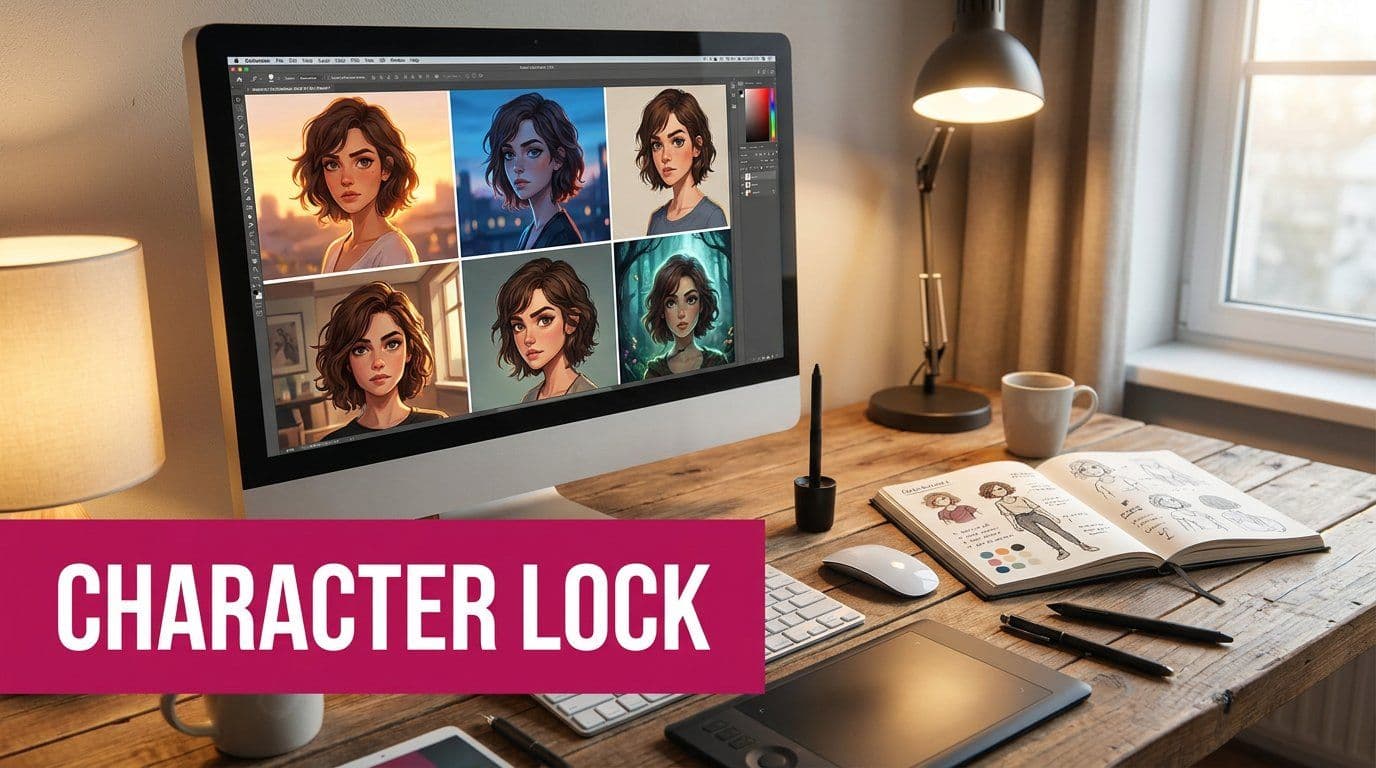
The single hardest part of bulk AI illustration is making the same character look like the same person in every image. Here is the prompt structure that actually holds.
Character Lock — Keeping One Character Consistent Across 30+ AI Images
If you generate images one at a time, character drift is an annoyance. If you're producing a 34-scene story, a comic season, or a children's book, it's the whole problem. Scene one gives you a six-year-old girl with honey-blonde curls. By scene nine she has straight brown hair and looks nine. Nobody watching will be able to say why the video feels cheap, but they'll feel it.
The people who solve this in bulk batches all converge on the same trick, and it isn't a better model. It's a lock block: a fixed, absurdly specific paragraph describing the character, pasted into every single row of the batch, unchanged.
Who's actually doing this, and why
- Story-video creators producing 20-40 scene sets where one protagonist carries the entire narrative.
- Comic and webtoon authors running a series across seasons, where a reader will instantly notice if a character's hair or build changes between episodes.
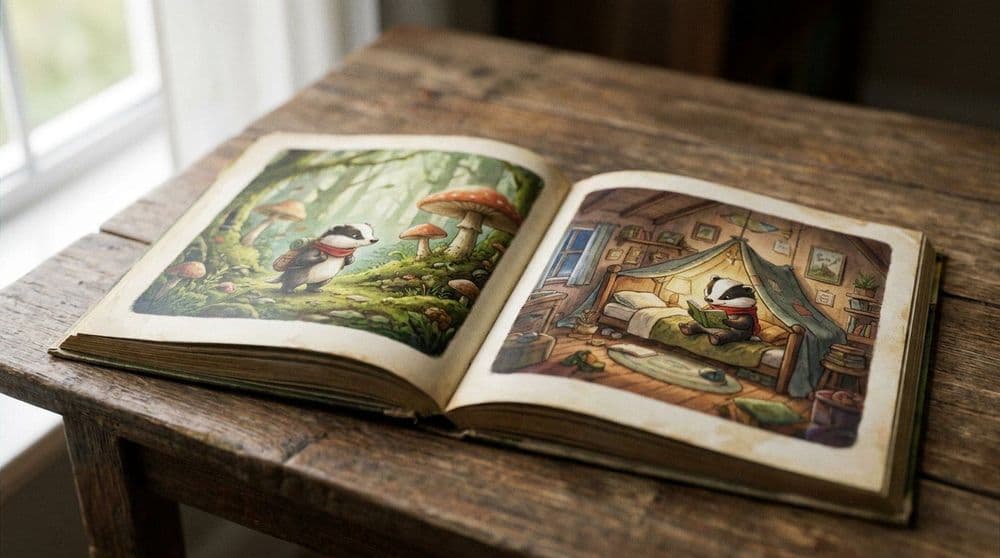
- Children's book illustrators who need the same small hero on twenty spreads, in different rooms, at different times of day.
- Animation and explainer producers building a cast — two or three recurring characters who appear in different combinations across scenes.
What a lock block actually looks like
Vague descriptions drift. The blocks that hold are uncomfortable in their specificity — age, face shape, exact hair style and colour, exact clothing, and the accessories that repeat:
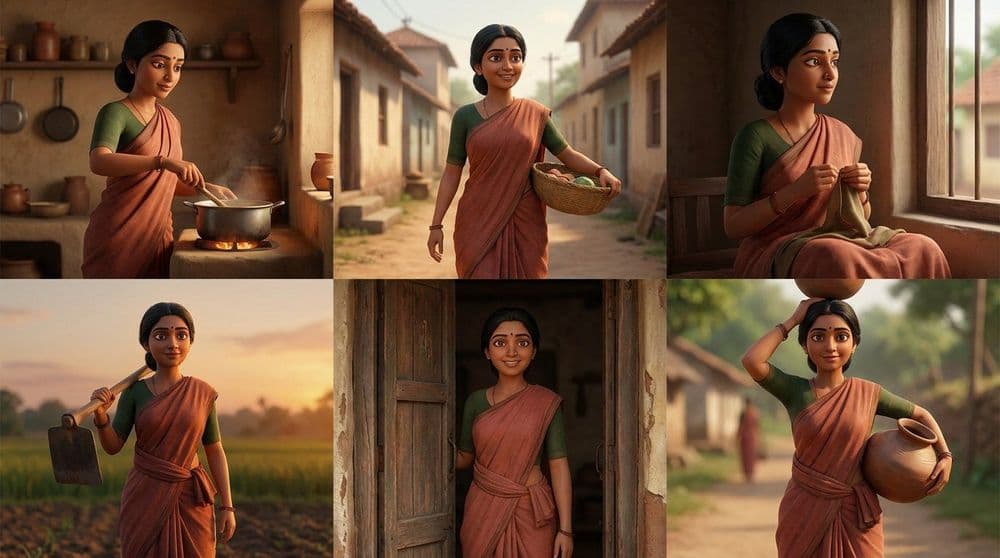
Character lock (identical in all 34 images): the same woman, around 35, warm brown skin, gentle oval face, expressive dark eyes, black hair tied in a simple low bun, slim build, wearing the exact same faded earthy-red cotton sari with a dark green blouse, a small traditional nose pin, simple metal bangles, barefoot. Exact same face, hairstyle, body, clothing, jewellery and age throughout.
Two things make this work. First, it names the things that drift — hair, age, clothing, skin tone — rather than mood or personality, which the model can't anchor on. Second, it ends with an explicit instruction that these must not change.
Series creators go one step further and write the lock as hard rules, including the negatives:
Canon rules: Jay is a man with long, thick dreadlocks and must keep the same appearance in every episode. Do not give him short hair, twists, waves, or an afro. Maya has long blonde hair and blue eyes; do not change her hair or eye colour.
Naming what the model must not do turns out to matter as much as describing what it should. Drift usually shows up as a "reasonable" substitution — a different but similar hairstyle — and an explicit negative is what blocks it.
Lock the cast, not just the hero
Multi-character batches need one block per character, plus a rule for how they appear together:
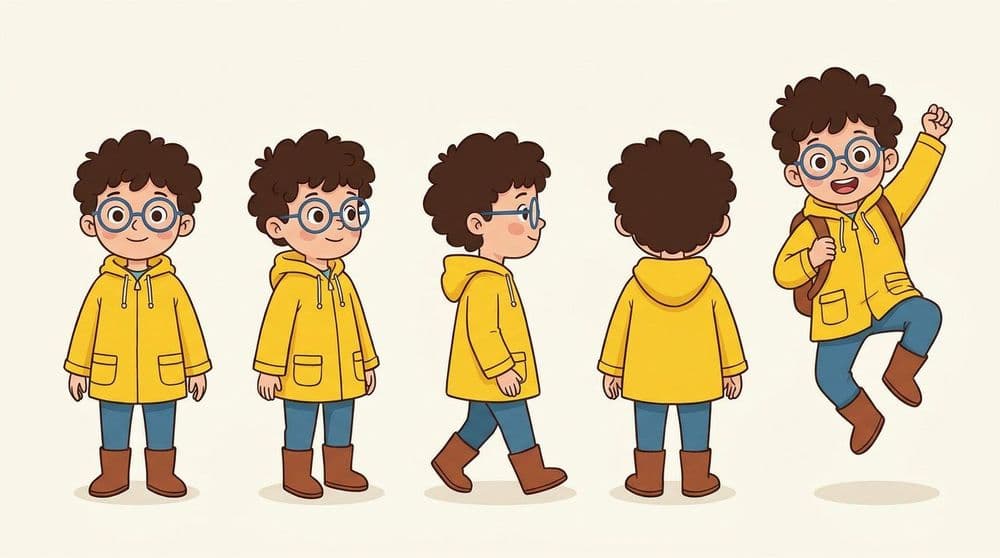
Cast lock. Rosie: 6 years old, big brown eyes, curly honey-blonde hair in two high buns with pink star clips, pink star pyjamas, rainbow rain boots, always holding a plush unicorn. Luna the ladybug: glossy silver glitter wings, tiny chef's napkin when in the kitchen. Every image uses the same rendering: 3D animated film look, soft cinematic lighting, warm colours, shallow depth of field.
Note the render line at the end. A cast can stay consistent while the art style drifts — locking both is what makes a set feel produced.
Which model to use
For a character carried across many images, a reference image is worth more than any amount of prose: generate or pick one canonical portrait first, then use image-to-image with that reference on every subsequent row — Nano Banana and Seedream hold a referenced face noticeably better than text-only prompting. Flux is the steadier choice when the "character" is a style rather than a face — an illustrated look, a collage treatment. Where this gets genuinely hard is in Midjourney and Stable Diffusion: both can hold a character with enough reference wrangling and seed discipline, but doing it across thirty frames means managing thirty separate operations by hand, which is the actual cost. The batch-row shape — one locked block, thirty varying lines — is what makes this a ten-minute job instead of an afternoon.
Tips from real batches
- Write the lock block once, at the top, and paste it into every row. Not "as established above" — models don't carry context between generations in a batch.
- Be specific to the point of feeling silly. "Long hair" drifts. "Black hair tied in a low bun with loose strands at the temples" holds.
- Name the negatives. "Do not change hair colour, length, or style" prevents the plausible-looking substitutions that cause most drift.
- Lock the render style separately from the character. They drift independently.
- Use a reference image once you have a frame you like. The first good image becomes the anchor for the rest of the set — far more reliable than describing the same face thirty times.
- Check consistency at frame 1, 15 and 30, not frame by frame. Drift is gradual; comparing the first and last frames of a batch shows it immediately.